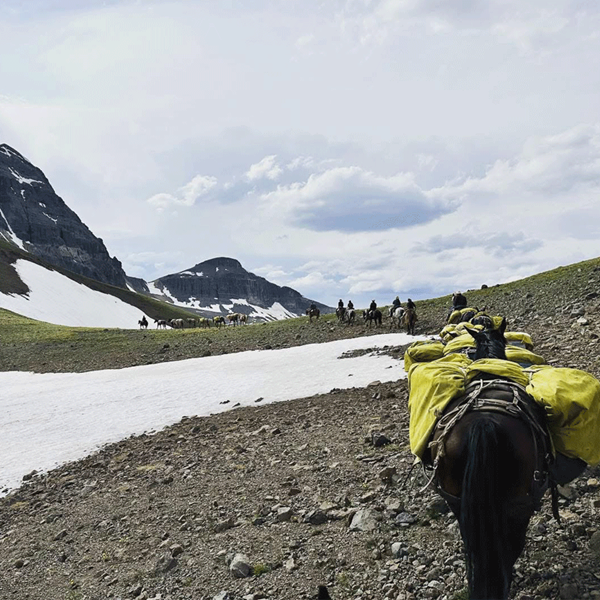
In the past decade, I have been fortunate enough to hunt species ranging from pronghorn to moose in states spanning from New Mexico to Alaska. With all the hours of e-scouting, boots-on-the-ground scouting, and actual hunt time, the one common theme these different hunts have had is that I could hunt any public ground in the unit(s) I had a valid license and tag for. I’ve hunted BLM land, national forest, and wilderness areas alike. On many of these adventures, I had friends hunting with me that resided in a different state. Every state we hunted was a level playing field for all of us—except my home state of Wyoming. In order for my non-resident friends to hunt wilderness areas in Wyoming, they had to hire an outfitter or have a resident (such as myself) accompany them at all times on their hunt.
Wyoming legislature passed Bill 23-2-401 (the Wyoming wilderness guide law) in 1957. This bill requires any non-resident holding a big- or trophy-game license to be accompanied by a licensed professional guide or resident guide when hunting in a federally designated wilderness area. This law is definitely one of the most controversial hunting laws that has ever been passed. One big misconception many hunters have about the wilderness guide law is the difference between designated wilderness areas and wilderness study areas. Wyoming is home to fifteen designated wilderness areas scattered throughout the state, such as the North Absaroka Wilderness near Yellowstone National Park or the Platte River Wilderness in the southern part of the state. These fifteen designated areas make up the nearly four million acres that this law pertains to. The forty-five wilderness study areas throughout the state have nothing to do with this law. These areas are open to non-resident hunters without a guide unless stated by Wyoming Game and Fish (WYGF) regulations.
There have been several reasons given for why this law was passed, but the number one motive cited by the majority of sportsmen in favor of the law is that it protects outfitters in these areas. Because non-residents are prohibited from hunting wilderness areas without a guide, outfitters are more likely to book these hunters as paying clients. At the same time, the law eliminates non-resident hunters as competition to guided hunts in those same wilderness areas. This has been referred to as an outfitter welfare system by many non-resident sportsmen who are angry that they cannot legally hunt the four million acres of designated wilderness in Wyoming on their own. Other states have systems in place to benefit outfitters in different ways, such as allocated tag or landowner tag programs. In Alaska, an outfitter is needed for non-residents to hunt certain species. While all these programs benefit outfitters to one degree or another, none of them enforce public land access restrictions like the Wyoming wilderness guide law.
Another reason some support this law is the claim that it protects wildlife and habitat in wilderness areas. Putting restrictions on non-resident hunters should result in less hunting pressure and harvest of game animals. The law protects habitat by having less people on trails as well as campsites where vegetation and trees can be damaged or destroyed. Additionally, if the wilderness law was lifted, many (if not all) these wilderness units would become limited entry—creating fewer hunting opportunities for residents and non-residents as well as lower draw odds. These arguments may look legit on the surface, and the law likely does lower the number of animals harvested to some degree. However, this law does not stop anyone from going into the wilderness to recreate in these areas. Residents and non-residents alike can hike, fish, hunt small game and upland birds, ride stock, or camp nearly anywhere they want to in the wilderness. The wilderness guide law simply doesn’t allow a non-resident with a valid big- or trophy-game license to be there without a licensed guide.
Another topic that is often brought up when discussing the wilderness guide law is safety. Some lawmakers and Wyoming Game and Fish personnel claim—due to the remoteness of the wilderness—that safety is a big issue. The theory is that prohibiting non-resident hunters from accessing these remote areas in the fall without a guide significantly decreases the number of accidents that would occur. While this may be true on the basis of decreasing the total number of people accessing these areas, I believe the biggest factor when discussing safety is whether or not an individual is qualified to be in these rugged wilderness areas, regardless of whether they are a Wyoming resident or not. Maybe sixty-eight years ago, when this bill was passed, I could understand this argument to some degree. Back then, Wyoming was full of real outdoorsmen and women that lived and thrived in wilderness country, but times have changed a lot since those days. Someone can move to Wyoming and get residency after twelve months and legally hunt in wilderness, even if they don’t know their hind end from a hole in the ground. However, a very experienced outdoorsman and hunter can’t legally access that same public land to hunt because they live in a different state. The safety argument does not make a lot of sense when presented this way.
Grizzly bears are always brought up when the wilderness law is debated. Claims that the recovery efforts of the grizzly had a lot to do with this law being passed seem to be a big sticking point for wilderness law supporters. While this may be true to some extent, Wyoming implemented this law eighteen years before grizzlies were listed as an endangered species. However, it’s hard to argue that having fewer people—especially unqualified or inexperienced hunters—in grizzly bear dense areas wouldn’t reduce bear-human conflicts. This seems especially true during the fall when bears are extremely food-driven and trying to build fat for winter hibernation. Fewer encounters where grizzly bears are killed helps with the recovery plan, moving them closer to being delisted—meaning states, instead of the Federal Government, can manage them. Not to mention, there are hundreds of thousands of designated wilderness acres in Wyoming that don’t have grizzly bears at all. Even with all that said, it still doesn’t matter if it’s residents or non-residents in the wilderness. Five residents that have no clue what they are doing around bears can create way more conflict with bears than a hundred non-residents that know how to properly act and react in grizzly bear country.
My personal argument for the wilderness guide law, or some type of similar restriction, is that it prevents more hunters from going into the backcountry completely unprepared—not only with regard to their own fitness and gear, but also when it comes to the preparedness of their stock animals. This mainly pertains to the western and north-central wilderness areas that require fifteen-plus mile trips through rocky, rugged terrain to get to where you need to be. Stock that have not been properly conditioned are the leading cause of people having bad (or even dangerous) experiences in remote wilderness areas. Just like me and you, animals need to get in good shape before going on a backcountry trip. Worn out stock animals quickly become a huge liability and can sometimes be dangerous to themselves, other stock, and people. I have witnessed tired animals quit and throw themselves down a hill, taking any other attached animals and riders with them. Not only is a situation like this extremely dangerous, but trying to get an animal that weighs over 1,000 pounds back on its feet in unfavorable terrain adds a whole new level of danger and difficulty to the setting. When stock becomes involved, especially big stock on a backcountry trip, the degree to which you absolutely need your ducks in a row is significantly increased. Bad equipment, poorly loaded or overloaded packs, and undertrained animals lead to more accidents where people or stock are injured—or even killed—than all the things mother nature can throw at you. Supporters of the wilderness guide law claim that injuries to both hunters and stock would increase if non-residents were allowed to hunt in the wilderness. This would then raise the number of emergency responses, which in turn becomes dangerous for search an rescue crews and takes resources away from other places. But to tell someone in this country they can’t do something because it comes with a certain amount of risk is pretty un-American and borderline unconstitutional. Furthermore, we all risk injury of death on a daily basis just by getting out of bed in the morning.
There have been many legal cases filed against the Wyoming wilderness guide law that claim it is unconstitutional and infringes on taxpayers’ rights. A few cases have ruled in favor of the non-resident or have been thrown out in lower courts due to insufficient evidence. In the 1973 case of Schakel v. State of Wyoming, Schakel challenged the statue as unconstitutional, arguing it violated several clauses of the US constitution—including the 14th amendment (which ensures equal rights). This case went all the way to the Wyoming Supreme Court, where they eventually upheld the constitutionally of the wilderness guide law. While the court did acknowledge there were some potential issues with the law’s design, it determined that hunting is a recreational sport and not a fundamental right.
Wyoming’s wilderness guide law has been in place for sixty-eight years and remains one of the most controversial hunting laws in the United States. Like most controversial subjects, I guess what’s “right” depends which side of the fence you stand on. As a Wyoming resident, I find it is pretty beneficial for the most part. Eliminating a percentage of your hunting competition in an area is always a plus. But there are some negative effects that I have seen from this law, such as overcrowding in non-wilderness areas. When you take away millions of acres from one demographic of hunters, there will likely be overcrowding in other areas. Additionally, when I take a non-resident friend or family member into the wilderness on a resident guide license, we can’t legally hunt in separate locations. I am supposed to be with them at all times in the field, basically holding their hand. Regardless of where you stand on this subject, outfitters and Wyoming residents are the beneficiaries of it. I do not believe there are going to be any changes in the foreseeable future. So, non-residents that are going to hunt Wyoming will have to hire an outfitter, find a resident buddy willing to go with them, or hunt areas outside of the wilderness boundaries. As my grandma used to say when I was a kid, “Boy, sometimes life just isn’t fair, so deal with it.”
At Huntin' Fool, we provide a variety of resources for you to plan ahead! From applying for tags, researching draw odds, hunt consultations, and more, we have you covered!
Apply for License Applications
Schedule a Hunt Consultations
Research Draw Odds
Research Application Deadlines
Get Your Magazine!

 Login
Login