September 2026
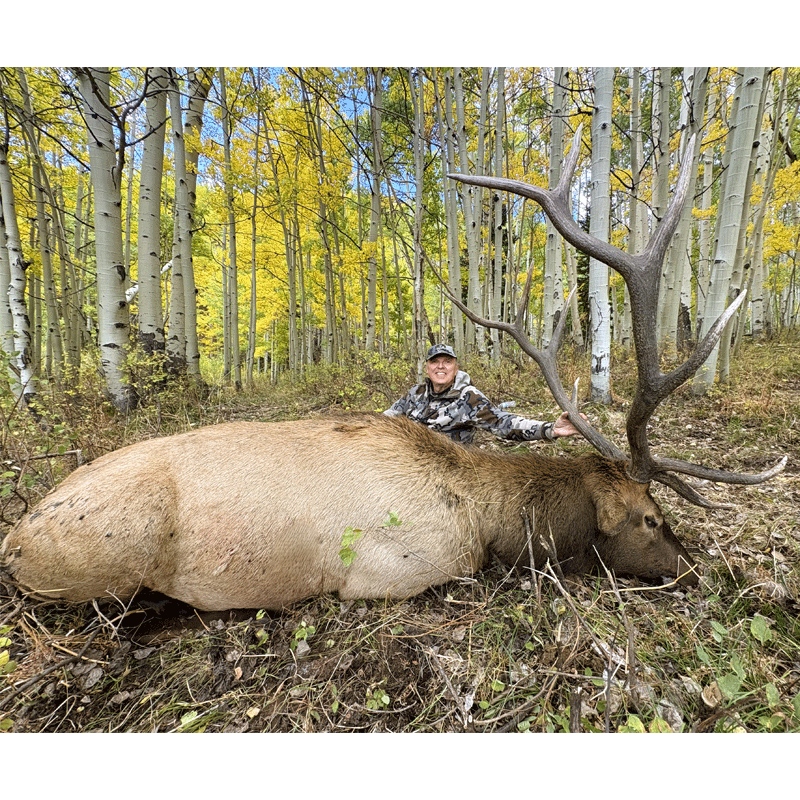
22 Years to Kill 330: A Utah La Sal Mountains Muzzleloader Elk Hunt
Hunter: Don Chandler
Story by: Douglas Chandler
Species: Rocky Mountain Elk
Location: La Sal Mountains, Utah
Method: Muzzleloader (Gunwerks MZ5 .50 caliber)
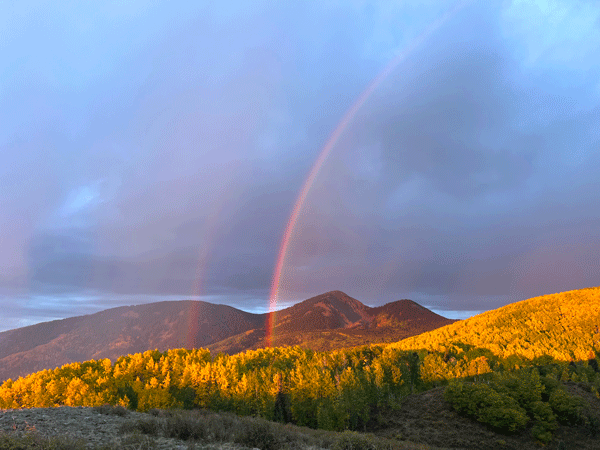
It was mid-September when my brother Don and I finally headed into the La Sal Mountains, just southeast of Moab, Utah. After twenty-two years of applying and waiting, Don held this coveted elk tag in his hands, and we both felt a mix of excitement and disbelief. The aspens were still green at 8,500 feet, but 1,000 feet higher, they were turning a radiant gold. Daily temperatures were in the mid-seventies, but cooling rains ended in several brilliant double rainbows. Every sunrise promised the chance to hear bugling elk echo through the high basins.
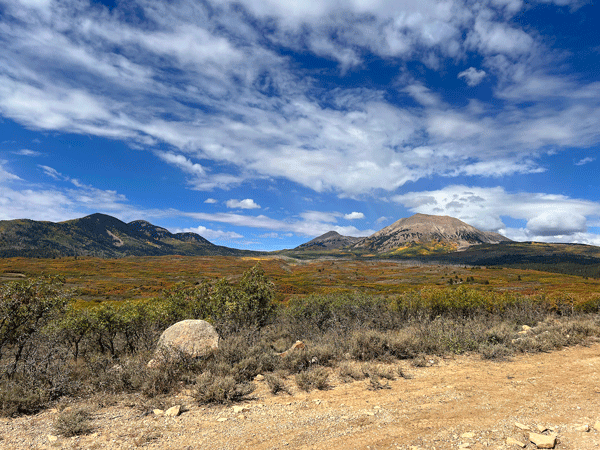
Each morning, we hiked into the hills, stopping often to catch our breath—coming from sea level, even our best training couldn’t fully overcome the thin air. But the landscape was breathtaking and the company of our guide even better; we shared stories and scans of distant ridges, knowing that after decades of dreaming about hunting elk in Utah, we had finally gotten the chance to enjoy some of the finest elk country in the West.
Twenty-Two Years to Draw a Utah Elk Tag
For Don, drawing this tag was the culmination of two decades of effort. Every year his Utah preference points crept up a little, and for the last several years, the odds were brutal. Utah now issues about half its elk permits by lottery, and demand seems to far exceed the available tags, so draw odds are very low. Even with Huntin’ Fool’s application service guiding him on unit choices and guides, the ratio of applicants to available tags always seemed insurmountable. When the news finally came that Don had drawn his preferred unit’s elk tag, he could hardly believe it. We knew that even with this tag in hand, the real work of preparing and hunting was just beginning, but the part he couldn’t control, the draw, was behind him, and we were ready to go.
Preparing a Muzzleloader for High Country
We started early and prepared routinely for the anticipated conditions of this hunt. Since this was a muzzleloader hunt, Don ordered a Gunwerks .50-caliber MZ5 muzzleloader with the Revic EXO MOA Extreme open sight. At around nine pounds, the gun wasn’t particularly light, so Don used the Gunwerks Revic tripod to help stabilize it when the altitude and hiking got the best of him. Gunwerks advertises that the Revic tripod offers “rugged reliability, giving you more stability to stretch your effective shooting distances,” which suited our strategy perfectly.
Gunwerks and Don worked together on the range to work up a custom load for the MZ5 using a 330 grain .50-caliber bullet. Don spent hours on the range practicing and eventually became very comfortable shooting out to 300 yards on the bench. In the back of our minds, both of us knew that such a long shot would be a last resort with a muzzleloader. In reality, we were hoping to close to a few hundred yards at most for a shot.
We also trained our legs and lungs for the elevation, hiking local peaks with heavy packs so we’d be ready for the thin air. We remembered that the risk of acute mountain sickness increases above 8,000 ft, so we took our time acclimating and sipped water and hydration packs constantly. We never rushed the training and started with plenty of lead time before the hunt.
Six Days of Bugles and Double Rainbows
Once the hunt began, elk were heard bugling everywhere, but they were elusive and constantly moving, and a shot on a trophy always seemed just out of reach. Each dawn, we slipped out quietly, and by midmorning we’d often hear several different bulls bugling in the distance or see groups of cows feeding with a trailing bull in the open. We glassed every basin and slope, weaving up and down ridges in an attempt to try and close the distance. Several times, a bull stood up or moved into a meadow, only to melt back into cover. The weather couldn’t have been better for hunting—cool mornings under broken cloudy skies followed by brief mountain showers that left the air clean and often painted the horizon with a double rainbow. We spent six long days hiking and glassing, three of them as full days out of camp, collapsing into our beds each evening sore, hungry, but hopeful that tomorrow might be the day.
A Bull at 75 Yards on Day Seven
On the seventh morning, we awoke before dawn determined to find a good bull. After a silent morning watch at a mud wallow next to a grassy pond fed by mountain runoff, our guide crept uphill through an aspen grove to glass for us. Minutes later, he whispered over the radio, “I see one or two bulls above us!” We strained our eyes up the slope and caught a flash of antler across a rockslide—a bull at about 350 yards—but it was simply too far and moving too fast for a safe and ethical muzzleloader shot.
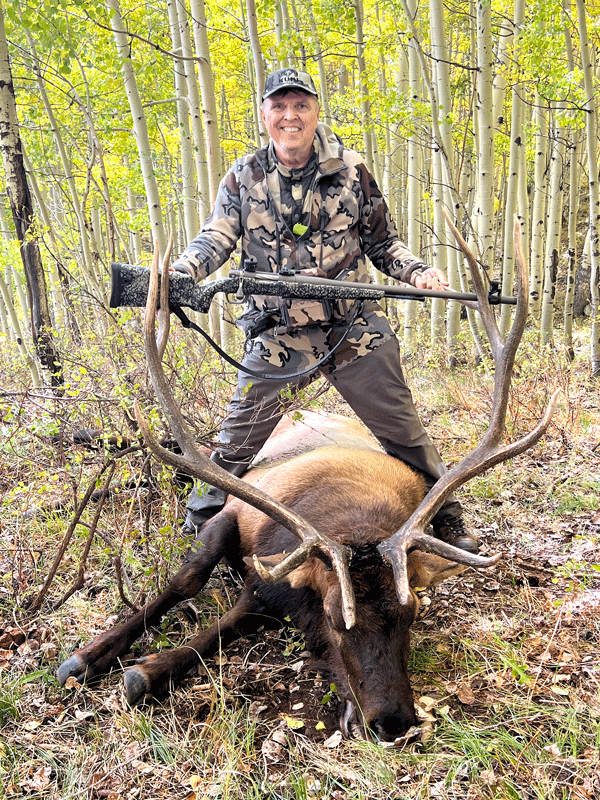
Then, without warning, a massive bull stepped out of the woods only 75 yards to our left, heading down toward the pond and wallow. I had him in my binoculars immediately. He was a heavy-racked bull, standing broadside of the trees. I quietly said, “Shoot,” and Don brought the muzzleloader smoothly over. There was a sharp crack and a flash as the custom .50 caliber slammed home just behind the bull’s right shoulder. The bull bucked hard and lumbered uphill about thirty yards, then paused on the ridge. With a final shudder, he wobbled and dropped among the aspens right where he stood. We sat in silence for a moment, hardly daring to believe it was over. After six days and several close calls, a great bull was finally down.
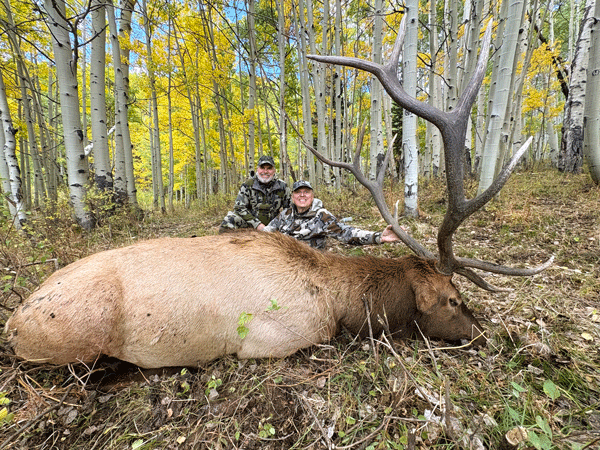
A 330-Inch Six-by-Six
By the time we caught up to him, exhaustion had turned to exhilaration. The bull was a dream elk—a dark, tall six-by-six. We later measured him at 330 inches.
In that instant, all the early mornings, hard hikes, and years of waiting to be drawn for a tag melted away; it felt like everything we’d done had led to this single moment. Don had placed the perfect shot, and the .50 caliber bullet did the rest. We field dressed the elk and celebrated quietly, too tired and awed to speak much. As we tagged out and packed up gear, I looked at Don and just said, “After twenty-two years… Totally worth it.” That night, we relived every detail, grateful for the opportunity and the experience of our guide. In the end, this wasn’t just another hunt for us; it was proof that patience and persistence pay off. The memories of that 330-class bull and of accomplishing it together will stay with us forever.
Additional Resources
- Utah Application Strategy
- Utah State Profile
- Utah Hunting Regulations
- Huntin' Fool Adventures
- Become a Huntin' Fool Member