June 2026
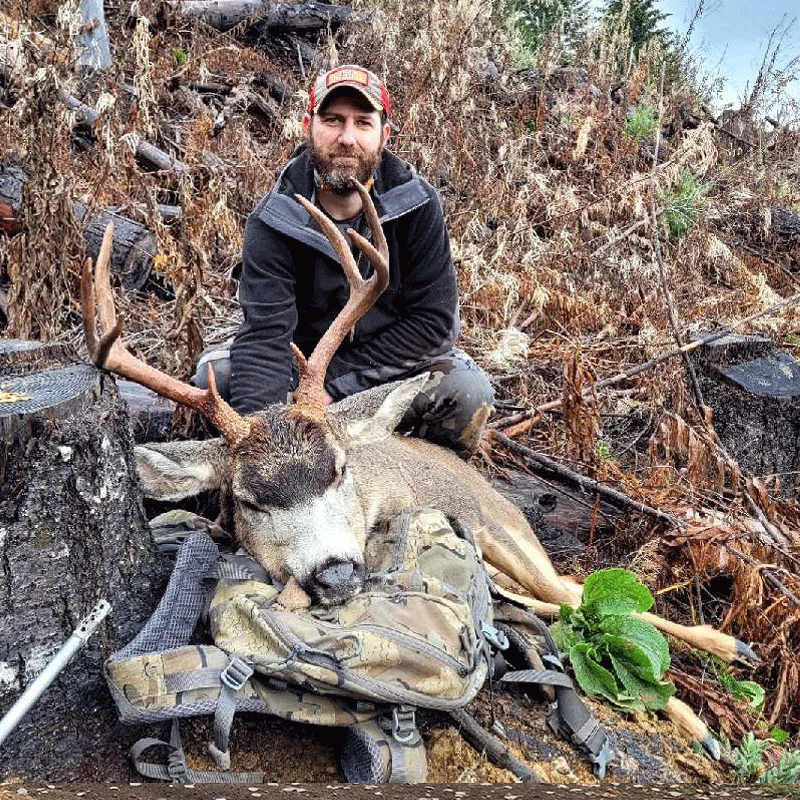
The Last Morning | Washington Blacktail Deer Hunting
Story By: Chad Amrine
The morning was clear, cold, and impossibly sunny for western Washington in November. Most days that time of year are a perpetual gray shroud, but that day, the sky was a sharp, crystalline blue. It was the next-to-last day of blacktail deer season, and I sat on an old logging landing high above a narrow valley, glassing the far slope with binoculars that had grown heavy in my hands.
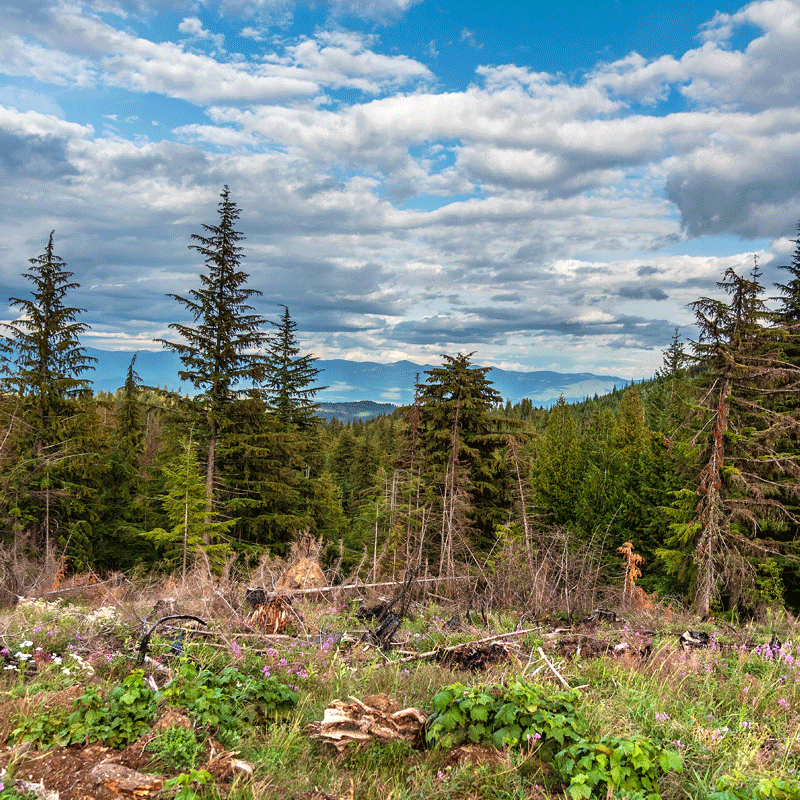
I had hunted hard every spare hour I could steal from work and family. I’d seen a handful of bucks—decent ones, even—but never the one that made my pulse quicken. As I sat there pondering the long string of choices that had led me to this lonely ridge, movement caught my eye across the canyon.
A doe slipped out of the deep shadows. Then another deer followed, and the low winter sun caught his antlers, turning them to glowing gold. He was the buck I had been waiting for all season.
There was only one problem: he was on the other side of a deep, brush-choked canyon. Three brutal miles pushing a mountain bike straight up my side, then three more riding down the far side. By the time I made the crossing, the deer had vanished into the timber. I found a spot to sit and waited until dusk, but he never reappeared. Still, I knew I would be back at first light.
That night I called the luckiest hunter I know—my brother. I described the buck and asked if he wanted to chase him with me on the last morning of my season. Being the lovable doofus he is, he said yes without hesitation.
We left the house at 4 a.m., drove as far as we could, then shouldered our packs and rode (pushed) our bikes for two grinding hours through the dark. We crested the ridge just as the sky began to pale. Another clear, cold morning greeted us. The clearing where I had last seen the buck was empty.
We hunted up the old logging road for several hours, glassing every opening, every patch of fireweed and salal. Nothing. By mid-morning, the truth settled in: this was the final day of my season, and we still had two tags to fill. My brother had a multi-season tag and could keep hunting, but for me, the clock had almost run out.
We turned back toward the bikes, already joking about new recipes for the dreaded “tag soup.” Halfway down the road, my brother paused and took one last look into the big clear-cut above.
“There’s a deer,” he said quietly.
It was a doe. And right behind her, moving through the tall fireweed, was a buck with horns that rose well above his ears.
“There’s a buck,” he whispered.
He ranged the deer at 680 yards. I dropped to the gravel road, trying to find a solid rest. The angle was almost straight up; the rifle wanted to point at the sky. I fought for a steady position, found it, then promptly lost the buck in the thick vegetation. He stepped out again. I centered the crosshairs on his shoulder and squeezed the trigger.
The buck stood there for a long second. I jacked in another round. He suddenly bolted after the doe, circling through the fireweed. The next time he appeared, I fired again. Then he disappeared completely into the tall stalks.
We looked at each other. “I think I missed,” I said.
But the doe kept walking, and the buck never followed. My brother studied the spot through his binoculars. “He’s lying there,” he said. “He’s gotta be wounded or dead.”
We watched for fifteen minutes. Nothing moved. Finally, we shouldered our rifles and started the long, miserable grind up the steep, brushy hillside. Twenty-five minutes of clawing through blackberry vines and slick clay brought us close to where the buck had gone down. We split up—my brother angled left, and I went straight up—so at least one of us would see him if he jumped.
I had gone maybe fifty yards when I saw him.
He was bedded behind an old-growth stump, only his neck and head visible. He looked straight at me, ears drooping, eyes heavy with exhaustion. For a moment, I considered waiting for a better angle, but the season was measured in minutes now. I raised the rifle, placed the crosshairs on his neck, and fired.
This time, there was no doubt. He slumped without a kick.
My brother came crashing through the brush. We high-fived, grinning like idiots, then began the search for the first bullet hole. We looked everywhere—shoulder, ribs, neck, even the butt. Nothing. Not a scratch from the 680-yard shots.
The only hit on that buck was the final neck shot at fifteen yards.
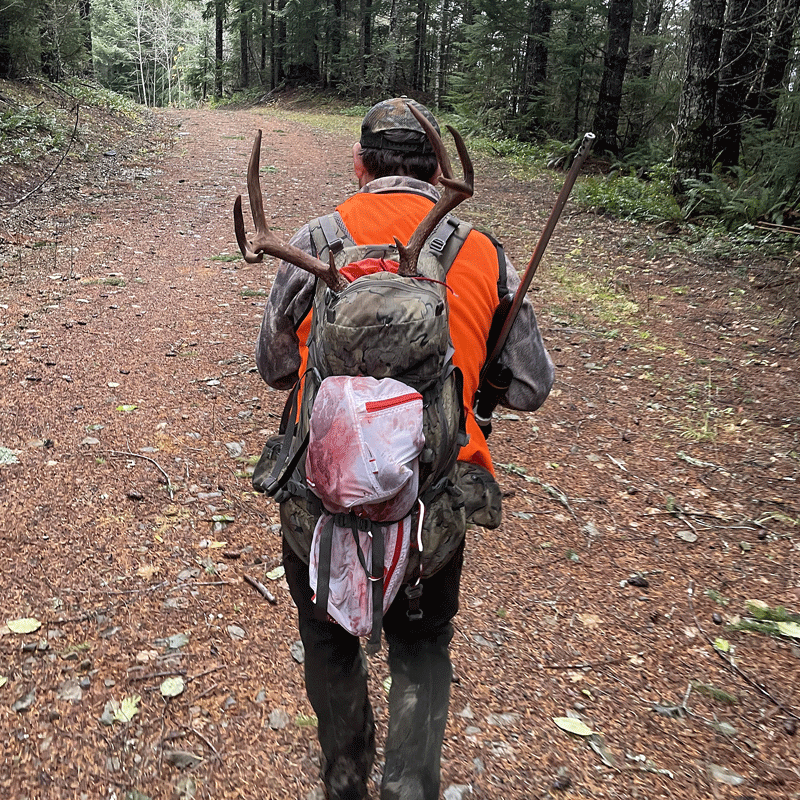
We stood there in the bright November sun, breathing hard, surrounded by the smell of crushed fir and damp earth, and we laughed until our sides hurt. All that grinding, all those miles on the bike, the missed shots at ridiculous range, the last-day desperation—it had come down to a tired buck looking me in the eye from behind an old stump on the final morning of the season.
Some hunts end with heroic long-range marksmanship. This one ended with a neck shot after everything else had gone sideways. And somehow, that made it perfect.
We field-dressed the buck, quartered him, and began the long, heavy pack down to the bikes. Tag soup was officially off the menu.
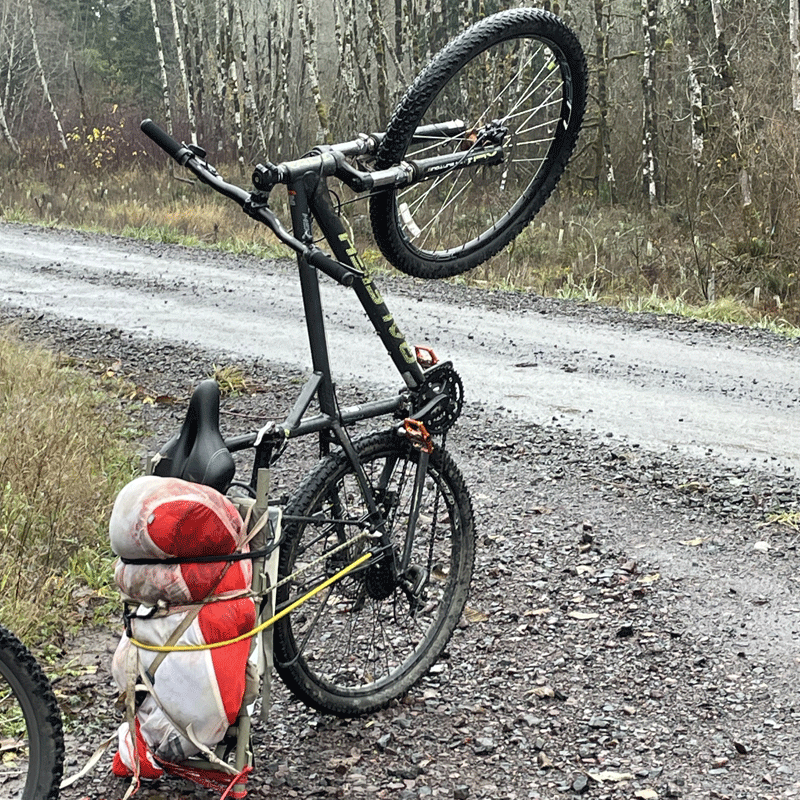
As we pedaled out under that rare sunny Washington sky, I thought about all the choices that had led me here—not just the ones on this hunt but the ones that keep me coming back to these cold November mornings. The early alarms, the sore legs, the brother willing to follow a half-crazy idea before dawn.
Somewhere in all that beautiful mess, the buck had been waiting.
And on the very last day, he let us find him.