January 2026
Mystery Ranch Partner Article
Story By: Colton Farley
I’ve always thought a September week spent chasing bugling bulls in the Rocky Mountains is the pinnacle of public land hunting in the US. Growing up in the South, though, such opportunities seemed as out of reach as a trip to the moon. I’d hear mention of uncles, cousins, or friends of friends who’d load horse trailers and fifth wheels to the gills to make the pilgrimage west each fall, but the notion could not have been more foreign to me. As a kid, I was spoiled with access to the family farm in northeastern Oklahoma. This narrowed my purview of hunting to a ladder stand and patience, the latter of which I’m still working on. My lack of patience often pulled me from the stand and into the brush to “still hunt”, which usually amounted to blowing out every deer in the area. The urge to roam and cover country would come to both help and hurt me out west, and I am still trying to find the balance.
Smash cut a decade or so, and I now have the privilege of living, working, and hunting as a Montana resident, enjoying the innumerable opportunities this state has to offer. In writing this, I acknowledge fully my lack of expertise in western hunting. By no means do I have decades of experience or a trophy room full of accolades, but I have been getting after it the last four seasons. As an eager student of the School of Hard Knocks, these semesters have taught me more than a few lessons—lessons that would certainly have been helpful when I started hunting out west. In the words and tradition of Coach Rick Vice, “I am a product of pain and suffering, and I am very happy to pass the savings on to you.”
Always expect competition and try not to be bitter about it.
I recognize that I am not a native Montanan, so the irony in grumbling about too many other hunters, especially from out of state, is not lost on me.
Competition has always been a part of hunting. As predators we have had to compete with mountain lions, wolves, bears, and other humans for millennia. While the clawed and toothed competition has been largely reduced over the last two centuries, human competition has skyrocketed—especially on public lands. With the popularity of western hunting exploding in recent years, one should expect to find fellow hunters anywhere and everywhere. It is difficult to embrace our fellow hunters, but—just as the mountain lion wants a stud muley buck in its cache—so does my neighbor, and his neighbor, and Joe Smith from Pennsylvania, who burned all his PTO and gallons of fuel to make the trek west; and that’s the game. It’s easier said than done, but I do make a conscious effort to appreciate fellow hunters. With a finite population of wildlife and an ever-decreasing supply of huntable public land, we rely on our fellow hunters for license sales and excise taxes to fund the system. We are immensely blessed to have millions of acres of public land to hunt on. (Big shout-out to Montana’s Block Management Program, without which we’d all be in dire straits.) So, who am I to hate on out-of-staters for making their dream trip west?
It's hard.
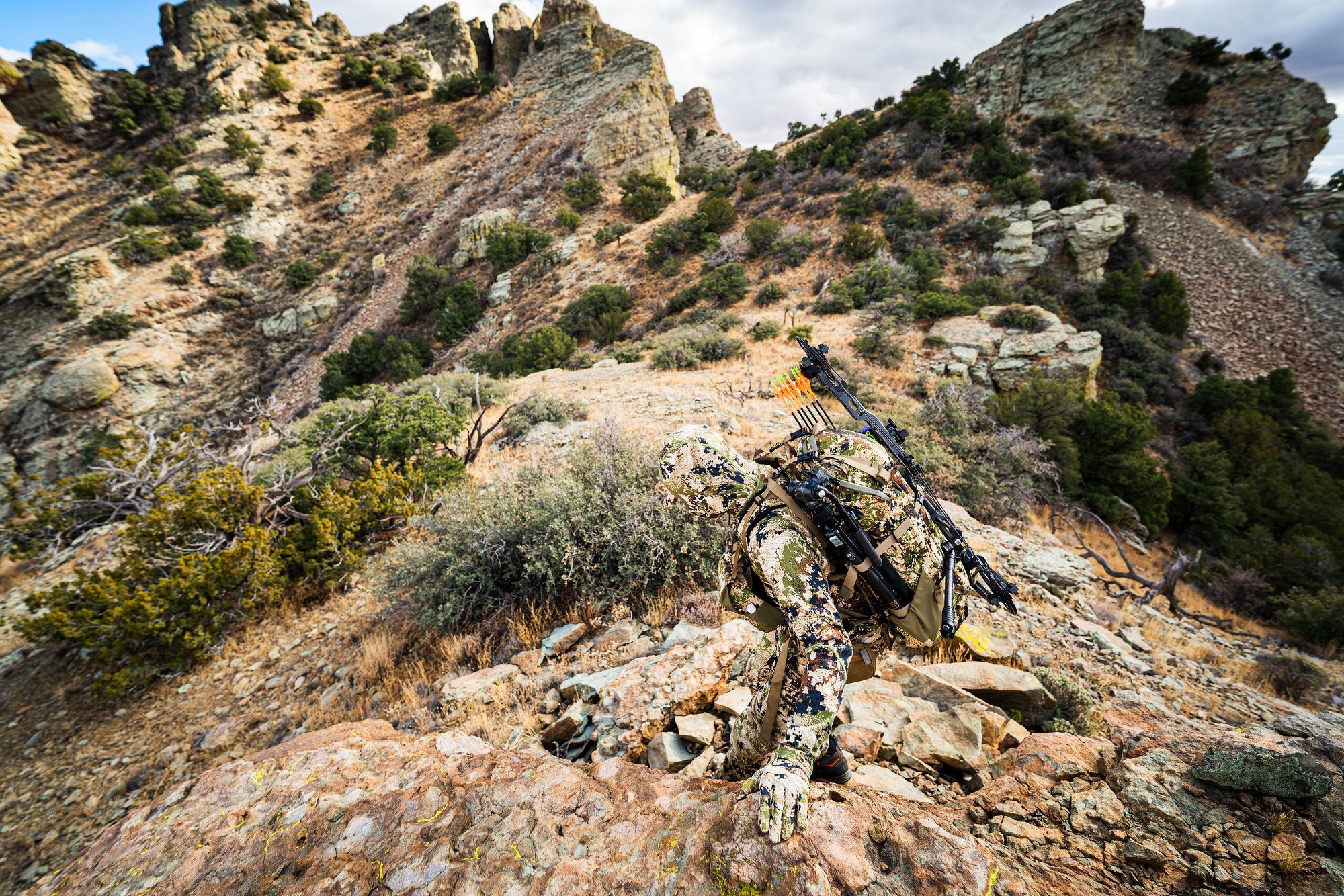
Google’s AI overview defines Type II fun as “activities that are difficult or unpleasant in the moment but become enjoyable and rewarding in retrospect.” I can think of no better term to describe my experience hunting out west. I’m sure folks have stories of cake walks where they got onto elk mere feet from the truck, but I don’t—and I’m (mostly) okay with that. The memories I’ve made that will last the longest are not of easy hunts; they’re of blizzards collapsing tents, or of days spent hiking miles up to a ridge only to discover the deer had changed its mind and plunged into a sanity-sapping snarl of blowdown. These experiences were objectively not fun in the moment but made the success at the end of the suffer-fest rainbow that much sweeter. I could delve much deeper into the woes, fatigues, and frustrations of this pursuit, but this article aims to neither persuade nor dissuade burgeoning hunters, only to inform.
Scouting is more important than anything else.
One of my greatest misconceptions when I started hunting out west was that there would be game around every corner or, if there wasn’t, that I could just hike until I found them. While being in shape helps immensely when hunting out west, the ability to outrun every other hunter does not translate to better hunting. While I still get itchy when looking at a faraway ridgeline and needing to know what’s behind it, I have burned myself enough times on that stove to let my binos do what my legs can’t (and shouldn’t). With the explosion of GIS apps like OnX, scouting via satellite imagery has become easier than ever. These platforms have become invaluable to the western public-land hunter; however, there is no replacement for time spent on the ground behind good glass.
Appreciate the pursuit and the country.
It can be easy to fixate on punching a primer or release and filling the tag, but hunting solely for the final act detracts from the experience. We are immensely blessed to live in a country that has prioritized conservation and wildlife management in a way that, generally, supports hunting. We have millions of acres of public lands on which to hunt, not to mention they are some of the prettiest and most awe-inspiring acres in the country. From swamps and marshes to glacial cirques, the American sportsman can hunt a myriad of species in a broad range of climates and ecosystems. I implore my fellow hunters to make a conscious effort to pause and appreciate the scenery, the pursuit, and the critters rather than weigh the enjoyment of the hunt exclusively on filling the tag. I often find myself in the backcountry thinking about how stoked twelve-year-old me would have been to know that one day he would get to chase bugling elk through the mountains of Montana.

Pack-outs suck in the best way.
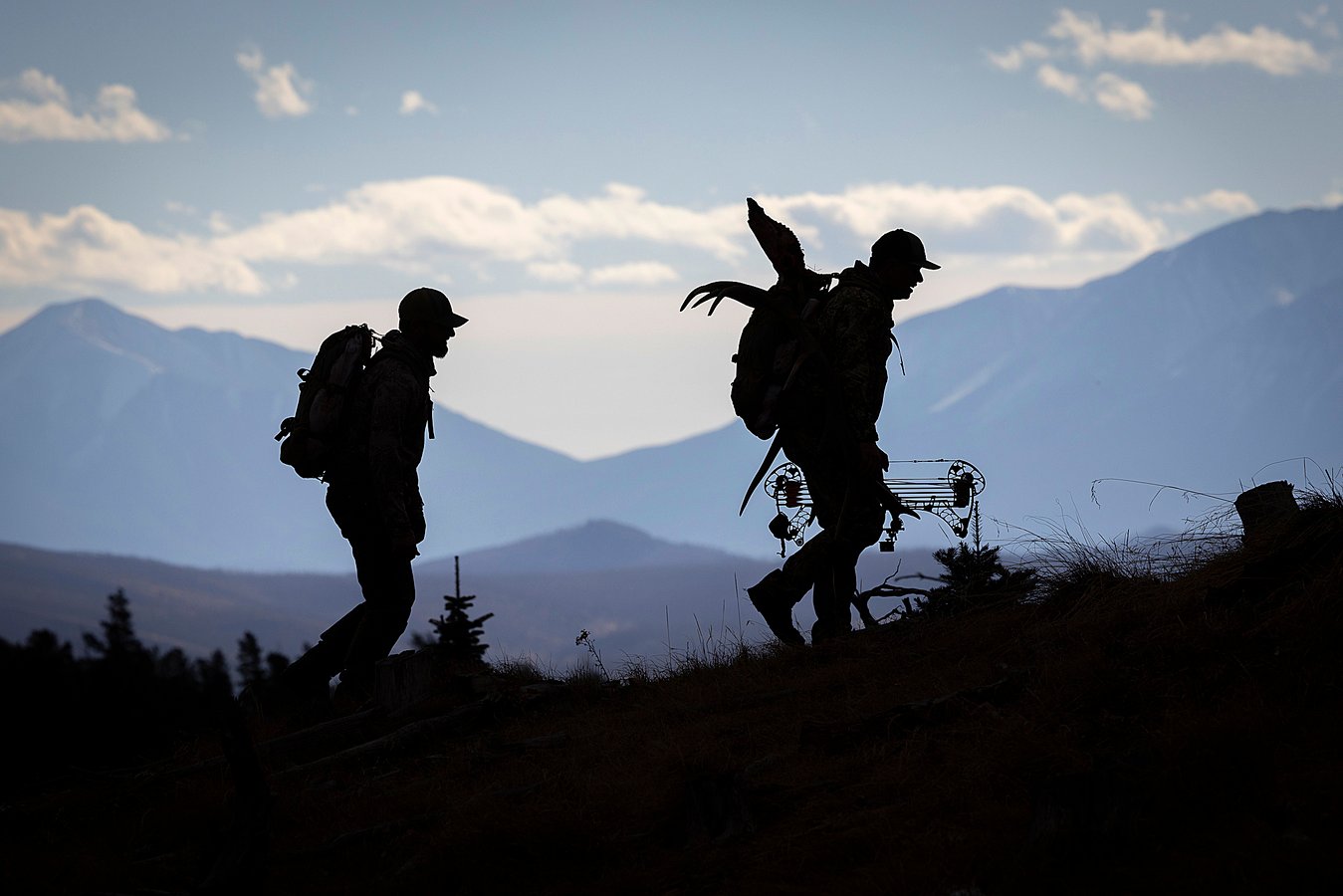
Packing out a quartered animal is the rewarding, humbling crescendo that ends the dance of the hunt. Obviously, there are tiers to pack-outs: deer or elk, downhill or uphill, short walk or long-haul. That said, no matter how heavy the load, technical the terrain, or distant the haul, they share the same energy of elation mixed with the physicality of brute force. Every aspect of western public-land hunting can be distilled into the pack-out. Blood (both parties’), sweat, and (sometimes) tears are all present during the last push to the truck. The feeling of tangible, hard-fought success when dumping a pack full of meat and horn at the truck is second to none. I have often sworn to never again shoot something “that far back”, only to find myself singing a very different and ambitious tune the following year.
Invest in good gear.
Good gear will empirically improve your experience hunting out west. However, the notion that one must drain their wallet on the latest and greatest gear before a trip is far from the truth. I moved to Montana with the same cheap tent, pad, sleeping bag, and Osprey daypack that I’d lived out of for two seasons of USFS fieldwork in Alaska. These four pieces of kit weighed in at sixteen pounds. While just fine for car camping in moderate climates, it was way too heavy and bulky to carry miles into the mountains. When I started working for Mystery Ranch Backpacks, I was quickly outfitted with a pack that was designed to carry heavy loads in and out of the backcountry, a concept that I’d been previously ignorant of. (While a pack designed for backcountry hunting greatly improved my experience, my base weight for my first three-night elk hunt was still fifty-five pounds; I have since re-kitted with better gear and have cut that weight in half.) Because I work for Mystery Ranch, I’ll recognize my bias towards their gear, but I do sincerely consider their hunting packs the most comfortable and practical backpacks for backcountry hunting. I use the MYSTERY RANCH METCALF 50 for day hunting and overnighters and the SAWTOOTH 65 for longer trips when I am carrying more gear.
Don’t forget how lucky we are.
Roaming the Rockies with a rifle or bow in hand is, to me, the pinnacle of hunting in the US. With millions of acres of public lands to hunt and regulations making it feasible for most to get tags, we should not forget how lucky we are to enjoy this pursuit. As challenging and frustrating as hunting can be, we can all make a pointed effort to appreciate the wildlife and scenery—not just the final act. There is thrill and reward in the kill, sure, but there is just as much, if not more so, in the journey, the scouting, the cold boot mornings, and the backbreaking pack-outs that “hurt so good”.