November 2026
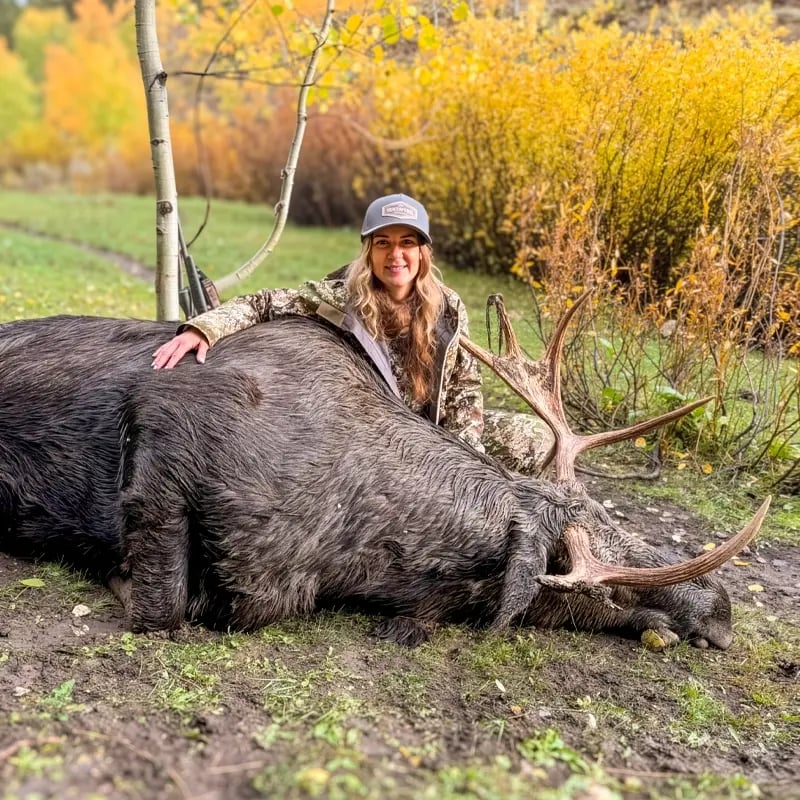
Were You Excited? An Idaho Shiras Moose Hunt
Hunter: Kristine Niehaus
Species: Shiras Moose
Location: Idaho
Method: Rifle
This is the story of my once-in-a-lifetime Shiras moose hunt in Idaho. It started in May of 2025 with a text from my boyfriend, Nate: “Did you check your email? Idaho draw results are out.” I was at work and expected to quickly confirm I hadn’t drawn—just like usual. Instead, I read: “Congratulations! You were successful…” I sent Nate a screenshot. He was thrilled for me—though I’m sure his first thought was something along the lines of, “Seriously? I’ve been applying for ten years…” Still, he immediately recognized how special this tag was while I sat in shock.
Planning a Once-in-a-Lifetime Hunt
True to form, Nate jumped straight into research mode. We already had a guided elk hunt scheduled in Idaho for October, so now we had a lot to figure out—like how I could be gone nearly the entire month without losing my job. As Huntin’ Fool members, we leaned on their resources, and after months of planning, we narrowed down an area and began counting the days.
We decided to hunt October 2 through 9. I had a work event on the first, so Nate drove out early to scout. On September 30, he spotted a bull crossing the road and climbing over a ridge. He marked it, sent photos, and was encouraged. He didn’t see another bull before I arrived, but he learned the area well and picked me up from the airport on October 2.
The weather was unseasonably warm—sunny and seventy-two degrees—so we chose to spend the first couple of days covering ground and scouting rather than calling aggressively. Cooler, rainy weather was coming, which we hoped would improve our chances.
A Bull Behind Us
On the morning of October 3, we sat on the ridge where Nate had seen the bull. Ten minutes in, I heard a grunt behind me. I turned to Nate, and his eyes widened: “Don’t move. There’s a bull behind you.” I assumed he was joking—that’s exactly something he would do—but I froze anyway. When the moose passed behind us, I caught a glimpse before he disappeared into the trees. Nate said his right side looked broken, but he’d come within sixty yards.
We didn’t see more moose that morning, but a group of about eighteen turkeys wandered right past us. We headed back to camp for lunch, encouraged—we’d already seen two bulls in the area.
That afternoon, we explored the opposite ridge and met a local cutting wood with his son. He confirmed there were plenty of moose around and shared a few helpful tips. Later, we ran into another couple with a moose tag, exchanged information, and moved on.
We ended the day sitting in a meadow. As we waited, a bobcat slipped out of the woods less than ten yards behind us. Nate tapped my leg to stay still. I quietly lifted my phone, thinking I’d capture an incredible video. After it left, I excitedly hit “play”—only to discover I had recorded a nine-second video of my boot. I had never hit record. So, you’ll just have to take my word on the bobcat.
That night, rain rolled in with distant thunder. Nate had a plan for Saturday.
Calling in the Rain
From everyone we talked to—and our own observations—it seemed moose were often taken closer to roads than deep in the timber. It made sense: visibility was limited in the thick woods, and animals tended to move through lower areas. While we were prepared to hike hard, we decided to adapt. Nate’s plan was to walk a creek bed for several miles, calling periodically, then work our way back—hopefully pulling a bull in along the way.
Saturday morning, it was pouring. The temperature had dropped, and we knew the conditions were in our favor. We geared up and headed out.
About half a mile in, Nate let out a grunt—and immediately got a response. We both froze. He called again, and the bull answered, more aggressively this time. We stayed put. I set up my rifle on a tripod, ready to pivot in any direction. Nate continued calling, and the bull began crashing through the timber, breaking branches as he came. Nate looked at me: “He’s coming.”
For the next several minutes, we whispered through a plan. I told Nate I’d get on the bull, but I wanted him to judge whether it was a shooter. I wasn’t looking for a giant—just a good representation of a Shiras moose. I trusted him completely.
Based on the sound, I aimed toward a game trail about eighty yards away. Nate had his phone recording. When the bull stepped out, I found his shoulder in my scope—and within seconds, I shot.
All our careful planning went out the window. I was simply too excited.
The shot dropped him instantly.
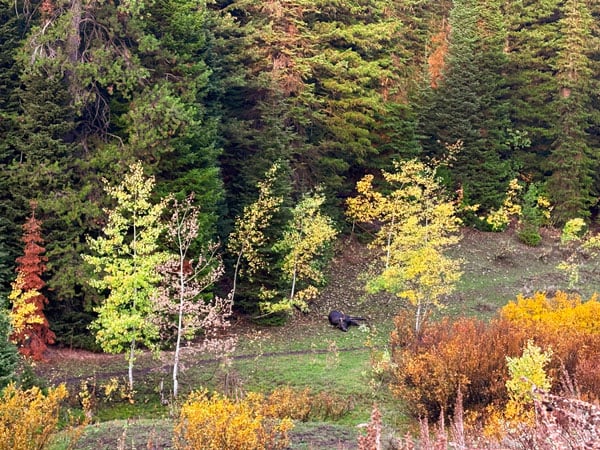
Were You Excited?
Then reality hit. I hadn’t checked his antlers. I hadn’t waited for Nate’s confirmation. As we tried to see him from where we stood, I could only make out part of his rack, and panic crept in. Nate tried to reassure me, though I could tell he had similar uncertainty.
Then he asked a question I’ll never forget: “Were you excited? When you look back at this, will it be a happy memory or a sad one?”
Through tears, I said, “I was so excited—that’s why I shot.” He reminded me that was what mattered.
We had just called in a wild Shiras bull, listened to him grunt and crash through the timber, and taken him at eighty yards. I was bringing home hundreds of pounds of meat for friends and family. In that moment, everything shifted. I felt overwhelming gratitude—for the experience, for the opportunity, and for the animal.
Walking up to him, I was struck by his size. He was the largest animal I had ever taken. We took time to soak it all in, and despite the rain earlier, the clouds broke and the sun came out as we took photos.
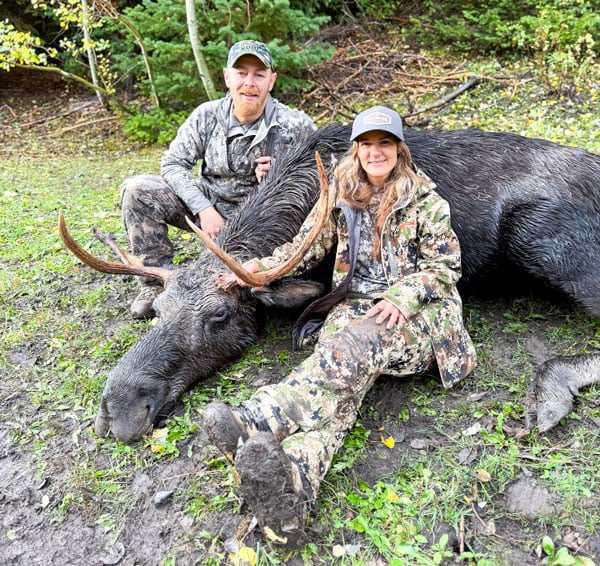
Then the work began.
Mud, Meat, and Gratitude
As we started processing the moose, the rain returned—hard. We did everything we could to keep the meat clean, but the mud made it nearly impossible. We were covered in it, the moose was covered in it, and we did the best we could.
About half an hour in, the couple we’d met earlier came by on their side-by-side. They were excited to hear the story and congratulated us before continuing their hunt.
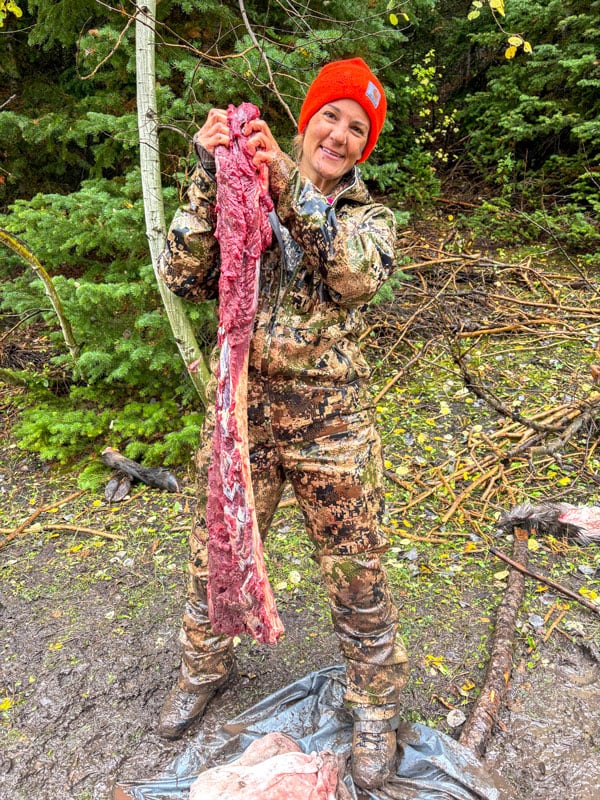
The pack out wasn’t too bad. We could have gone straight up to the road, but the steep, muddy slope made that risky, so we took a longer but safer route to the truck. Nate handled the caping while I shuttled meat back and forth. The shorter distance made it efficient, and before long, we had everything loaded and back at camp.
We were muddy, bloody, exhausted—and completely elated.
I hope to hunt for many more years, but I know this experience will always stand out. It had everything you could hope for: the challenge, the unpredictability, the success—and I got to share it with my best friend.
I couldn’t have been more blessed to draw that tag.
Additional Resources