March 2026
Forty-Three Years Coming | Montana Bighorn Sheep Hunting
Story By: Grant Winn
Forty-three years. That’s how long I had been applying for a Montana bighorn sheep tag before my name finally came up in 2025 for unit 121—the rugged country in northwest Montana between Plains and Thompson Falls. I grew up in Plains, and every Sunday on the drive to church in Thompson Falls, we’d slow down where the cliffs drop straight into the Clark Fork, hoping to spot those white dots high on the rock. Those childhood glimpses planted a seed that never left me. Over the decades, I served more than ten years on the board of directors of the Montana Wild Sheep Foundation, giving back to the resource I loved. The year I termed off the board, Montana Fish, Wildlife & Parks rewarded that lifetime of patience with the tag I never thought would come.
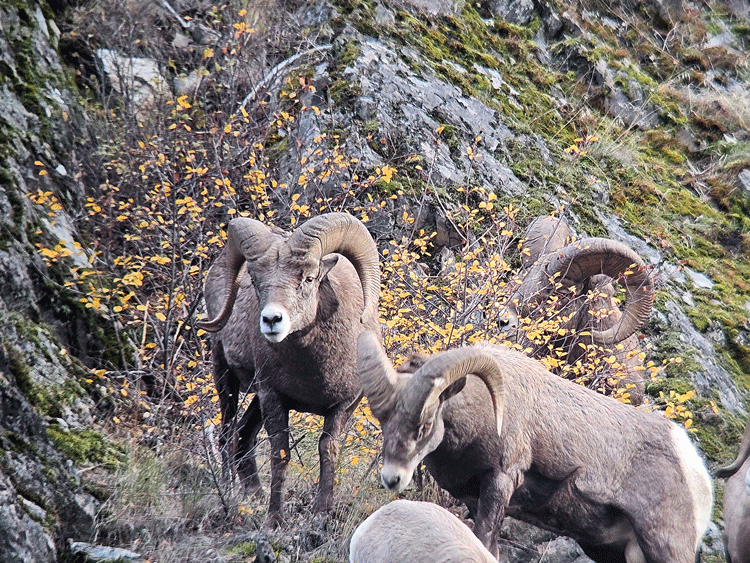
This sheep herd—the iconic Thompson Falls/Clark Fork population that inhabits Unit 121 and surrounding areas—was started in 1959 with nineteen transplanted animals. The population boomed in the decades that followed, reaching as many as 400 animals at its peak and averaging around 200 from the 1990s to 2009. I spoke with Zach, the wildlife biologist for the district, and he said recent aerial surveys over 2023 and 2024 averaged about one hundred animals. With persistent mortality from highway and railroad collisions along the Clark Fork corridor, FWP decided to cautiously increase the number of ram tags in Unit 121 from one to two for 2025, providing a bit more opportunity while continuing to prioritize conservation. Montana Fish, Wildlife & Parks, the Montana Department of Transportation, and the Montana Wild Sheep Foundation are actively collaborating on solutions to reduce those vehicle strikes—they’ve already installed fencing in key spots, electrified road mats to deter crossings, and flashing signage to warn drivers of sheep on the road.
In March of 2025, I was working the Montana Wild Sheep Foundation banquet in Bozeman like I had so many years before. While I was selling raffle tickets, my friend Ryan Speikermeier walked up, grinning ear to ear. Ryan lives smack in the middle of unit 121. He pulled out his phone and started flipping through photos and spotting-scope shots of some absolute giants he’d been watching through the previous hunting season: deep curls, heavy bases—the kind of rams that make a grown man weak in the knees. Only one ram tag had been issued in 121 the year before. Something about those pictures hit me square in the chest. I looked at Ryan and said, “I’m putting in for 121 this year.” He just laughed and said, “You better. Somebody's got to get the tag."
I learned I’d drawn the tag a couple months later while fishing the Snake River on a walleye trip with my wife, Mara, and a handful of friends. I snuck away from camp to check the FWP website on my phone, saw my name, and let out a whoop that rattled tents all the way to the boat ramp. Everyone thought I’d hooked a 30-inch walleye. Nope—just a sheep tag.
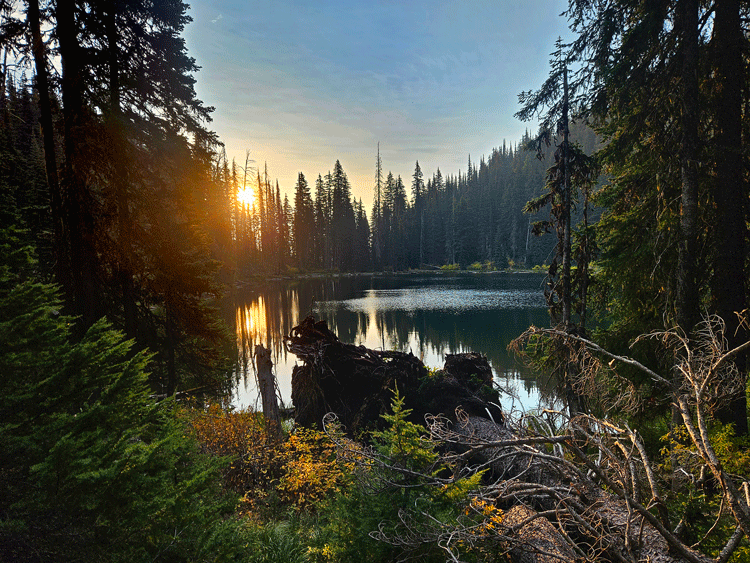
Unit 121 is no gentle place. It’s a maze of steep, timbered draws, avalanche chutes, and granite spines that guard high alpine basins. That summer, my dog and I logged more than 120 miles of scouting and missed only two weekends. We climbed to several lakes, topped out on peaks that don’t bother with trails, and learned the country the hard way: one boot print at a time. The rams were playing hide-and-seek, bunched up in dark timber, slipping out only when no one was looking. We heard rumors—good rams here yesterday, big one there last week—but every time we arrived, we’d find only fresh tracks in the dirt.
One July day in particular stands out. We left the truck an hour before daylight and headed for Priscilla Peak—five miles and 4,300 vertical feet to the top. It was already pushing sixty when the sun cleared the ridge. I sucked my three-liter bladder dry while eating a sandwich on the summit, then started down. By midday the temperature hit ninety. Heat exhaustion crept in fast: dizziness, chills, the whole ugly package. I found a scrap of shade, lay down for thirty minutes, and tried to keep my core from cooking. On the descent, I was so thirsty I dug a fist-sized rock out of a wet spot on the trail, waited for the hole to seep full of rusty water, and drank it like it was Dom Pérignon. My dog just looked at me like I’d lost my mind.
Come September, I was able to move my camper onto a private lot on the Clark Fork River thanks to my buddy John McNulty putting me in touch with the owner. Three months of hookups and a short drive to the mountains—pure luxury in sheep country.
After hunting every weekend starting in archery season, as well as a few other days here and there, I left for the opening week of general elk season. I had drawn a tag in area 700. I was fortunate to get a bull opening morning that was my personal best. A beautiful six-point scoring over 370 points. With the help of my buddy Dave Hotchkiss, we had him loaded up and heading to the butcher the next morning.
I dropped my elk off at Lolo Locker and headed back to sheep camp. Then one afternoon my phone rang. My friend Richard McDonald told me that the other tag holder had killed a ram and that there was another ram that had been with the first that I should look at. We glassed until dark and found the second ram, but Richard shook his head. “I think there is a bigger one.”
The next dawn, Richard, Crystal (his wife), and I were back on the mountain, binoculars up at first light. Three hours in, Richard and Crystal slipped up a side road to answer nature’s call. Ten minutes later they came skidding back. “We got him. Big one. Come have a look.”
I followed them to the spot and settled the spotting scope. There he was, tending to an ewe on top of a cliff, the sun lighting up horns that never quit. Massive bases and deep curls that carried their weight all the way to the tips—one side broomed off square, the other curling high above his nose. Forty-three years collapsed into that single moment. I knew. He was on the opposite side of the river, so I had to drive down to the bridge and back up the other side. After hiking up the ridge, I spotted him again.
I settled in, found the crosshair behind his shoulder, and squeezed. He staggered, took two stumbling steps toward the edge he’d been following the ewe on, and pitched forward off a hundred-foot granite wall. I heard the sickening crack of those heavy horns smashing into rock after he fell out of sight, a sound that still echoes in my head. For a long second, the mountain was dead silent except for the beat of my own heart and the blood pulsating in my veins.
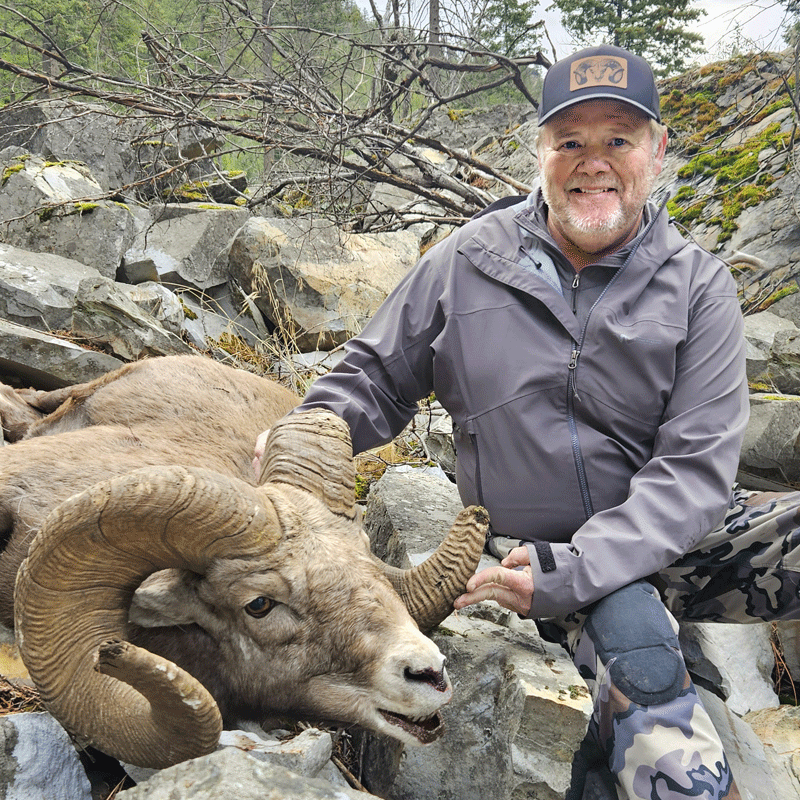
When I finally reached him, he was wedged between two boulders at the base of the cliff, neck broken from the fall. He still had his horns intact, although they were a little beat up. I knelt there in the scree, hand on those battered but still magnificent curls, and let forty-three years wash over me. This was the ram I’d been chasing since I was a kid riding to church in the back of my parents’ motorhome.
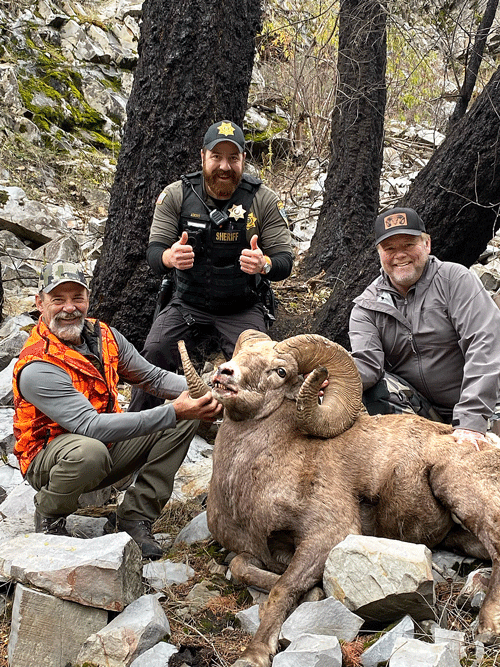
I brought him to the FWP office in Missoula the next day and had him plugged. They green scored him at 191".
Unit 121 gave me a challenging and memorable sheep hunt. I earned every blister, every swallowed mouthful of trail-seep water, every sunrise spent freezing on a windswept ridge. Forty-three years of applications, a lifetime of loving wild sheep, and one perfect November morning on a northwest Montana mountain. Some dreams are worth waiting for. Mine wore full-curl horns, answered on the first try, and left this world with one hell of a bang when he hit the rocks.