March 2026
Eleven Days Solo | Colorado Mule Deer Hunting
Story By: Stan Courtnay
This story begins five years ago when I met a gentleman twenty-five years my senior. We connected easily as I told him stories about my hunting trips, and he began sharing stories of hunting early-season mule deer in Colorado’s high country back in what he called the “good ol’ days”. Every year, before he’d moved east, he’d hunted velvet bucks high above timberline—long climbs, thin air, and wide-open basins.
One afternoon, he invited me to his office. When I arrived, he laid out stacks of old paper maps across his table. The edges were frayed and the corners folded, and pencil marks traced routes only time could teach. He pointed out basin after basin and bowl after bowl, explaining how the deer used the terrain, wind, and pressure. He even explained to me where the bucks migrated when they left the high country in that unit. He told me he could tell I loved to hunt and wanted to pass that knowledge on. I didn’t know it then, but those maps would shape a future hunt.
I circled 2025 on my calendar. The season would open September 6—the earliest opening in the five-year cycle. Early dates meant better odds of finding a big velvet muley above the timberline. I didn’t think I had the points to draw, but luck broke my way. When I got the notification, I was ecstatic. This was the tag I’d been waiting for and the year I wanted to have it.
Day 1
I brought twelve days’ worth of homemade backpacking meals but packed in eight days’ worth to start. With five and a half days to scout before the opener, I wanted flexibility. Fully loaded—rifle, optics, food, and water—my pack weighed sixty-two pounds.
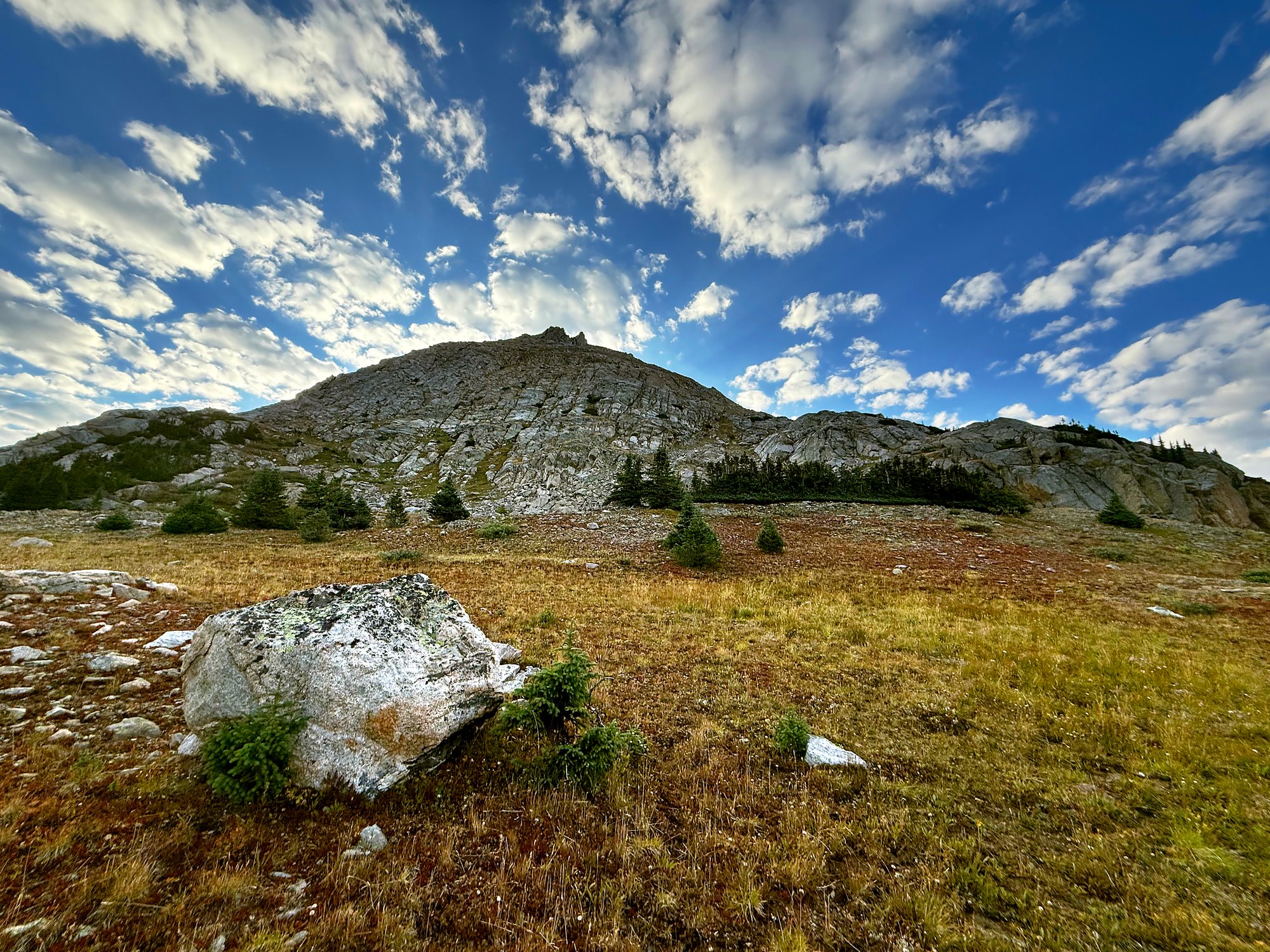
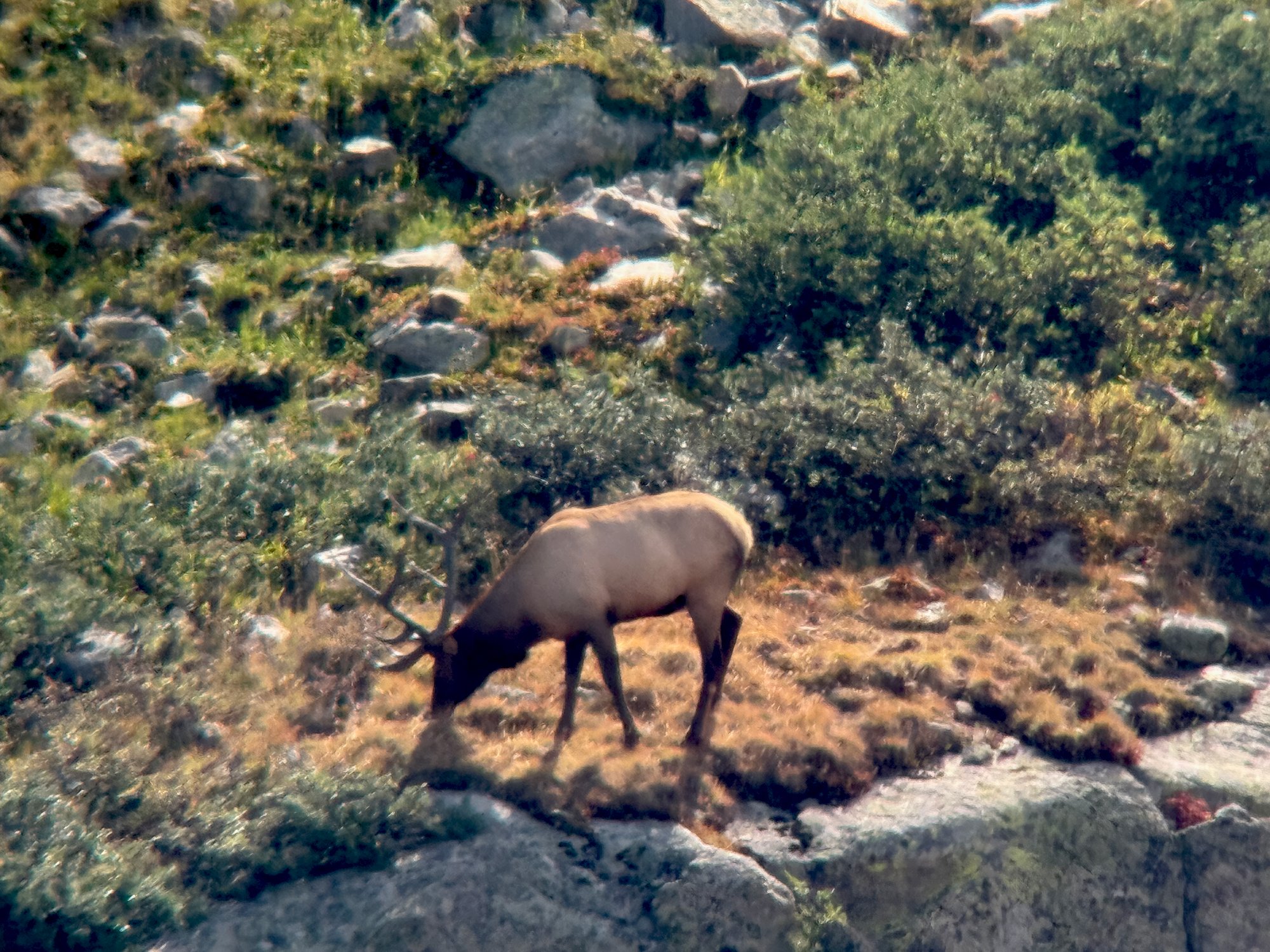
I chose a camp five miles in beside a creek, strategically positioned to reach multiple basins within a three-mile radius. Camp sat just over 11,000 feet, with hunting terrain climbing up to 12,700 feet. I’ve never struggled with altitude, but I was deliberate on day one, taking my time while hiking and giving my body time to acclimate. Three miles in, I stopped to rest and do a little glassing. Within a minute, I picked up movement: a mature 5x5 bull elk feeding 500 yards above me in the late morning sun. I watched him through the spotter, taking photos and video, then moved on.
At camp, while unpacking, I discovered a major mistake. Six weeks earlier, I’d bought a new Dyneema shelter—seventeen ounces total with the pole and stakes. Somehow, I’d brought my old tent but only packed the single carbon pole for the Dyneema setup. The correct poles—and tent—were 1,800 miles away.
After a short moment of disbelief, I went to work. I cut a sapling for a rear pole, used my carbon pole in front, and staked it tight. It wasn’t perfect, but it was weatherproof. I wasn’t going to let this mistake ruin my hunt.
Day 2
The first evening of glassing produced elk but no deer. The next morning, I climbed to a high saddle overlooking a hidden basin only visible from above. I glassed all day without seeing a deer.
At 6:40 p.m., two mountain goat billies appeared below me. I watched them for over an hour. Goats have a way of owning terrain—standing motionless for minutes, then feeding deliberately. I watched them until dark, then headed back to camp.
Days 3–5
The next three days were physically demanding and mentally frustrating. I hiked hard, climbed steep scree, and glassed relentlessly. I covered basin after basin, focusing on hard-to-reach areas where I knew other hunters wouldn’t be going and the deer wouldn’t be pressured.
I saw animals—around forty elk (including a few good bulls), another goat, two does, and two average bucks—but not the big velvet muley I was after. The deer numbers were lower than expected, but I continued to cover ground and check off locations.
Day 6
I saved a difficult spot for opening morning. The route required dropping 500 feet to the valley floor, then climbing 1,500 feet to a saddle on the backside of the ridge. I left camp well before daylight and climbed in the dark. It took two and a half hours to reach the saddle. As daylight came on, I glassed methodically. I spotted a young billy bedding on a rock outcropping, my fourth goat of the trip. I enjoyed seeing goats, but, at that point, I’d only seen five deer total: three does and two average bucks. Concern was setting in, but I was motivated.
Day 7
On day seven, I hiked two miles down the valley before climbing a mile up into a small, overlooked bowl. I arrived at my glassing knob at first light. Around 10:30 a.m., a buck materialized on a rocky ridge—he’d likely been bedded until the sun forced him to shift.
Given the lack of bucks, I committed to shooting a good velvet deer, and this one fit the bill even though he wasn’t the big buck I’d been hoping for. He disappeared into a patch of timber and didn’t reappear for over three hours. When he finally stepped out, I set up prone, confirmed the range, and checked wind on both sides of the bowl and the level on my rifle as I waited for a perfect broadside shot.
The trigger broke and the buck bolted. I reviewed the footage I’d taken through my spotter; I’d missed by a hair—there was more wind drift than I’d accounted for. It was a clean miss but still painful after seven hard days.
That evening, glassing a different bowl, I spotted two bucks—both significantly larger than the buck I’d missed. I executed a textbook stalk, dropping out of view off the backside of the ridge and circling around to get into range. When I crested back into view, they were gone. A storm rolled in, and I waited in the rain until dark, hopeful that the bucks would reappear. They never did.
Days 8–9
Day eight produced more miles, a pine marten encounter, and a beautiful bear at 200 yards. I passed him—I hadn’t bought a bear tag. This hunt was about one thing: a velvet muley.
Day nine, I ran out of food and hiked back to the truck. The ten-mile hike reset my mindset. Back at camp, rain and hail pinned me in the tent. I made a plan. With only three and a half days left, I’d go all in.
Day 10
I left camp at 3:30 a.m., heading back toward the big ridge I’d hunted opening day. A quarter of the way up, I stopped to shed my puffy—and realized I’d left my binoculars at camp. That moment could have ended the morning hunt. Instead, I turned back. “Adapt and overcome,” I told myself. I’d left early enough that morning that I could still make it to a glassing point after stopping to grab my binoculars at camp, but my choices were limited. I prayed, weighed my options, and chose the basin where I’d seen the goats on day two. It felt right.
Fifteen minutes after sunrise, I slipped through a 12,400-foot saddle and began glassing from the top down. Almost immediately, I spotted two bucks and a doe feeding 850 yards away. One was a big buck, but something felt off. The deer kept looking down the bowl.
I followed their gaze.
Another buck.
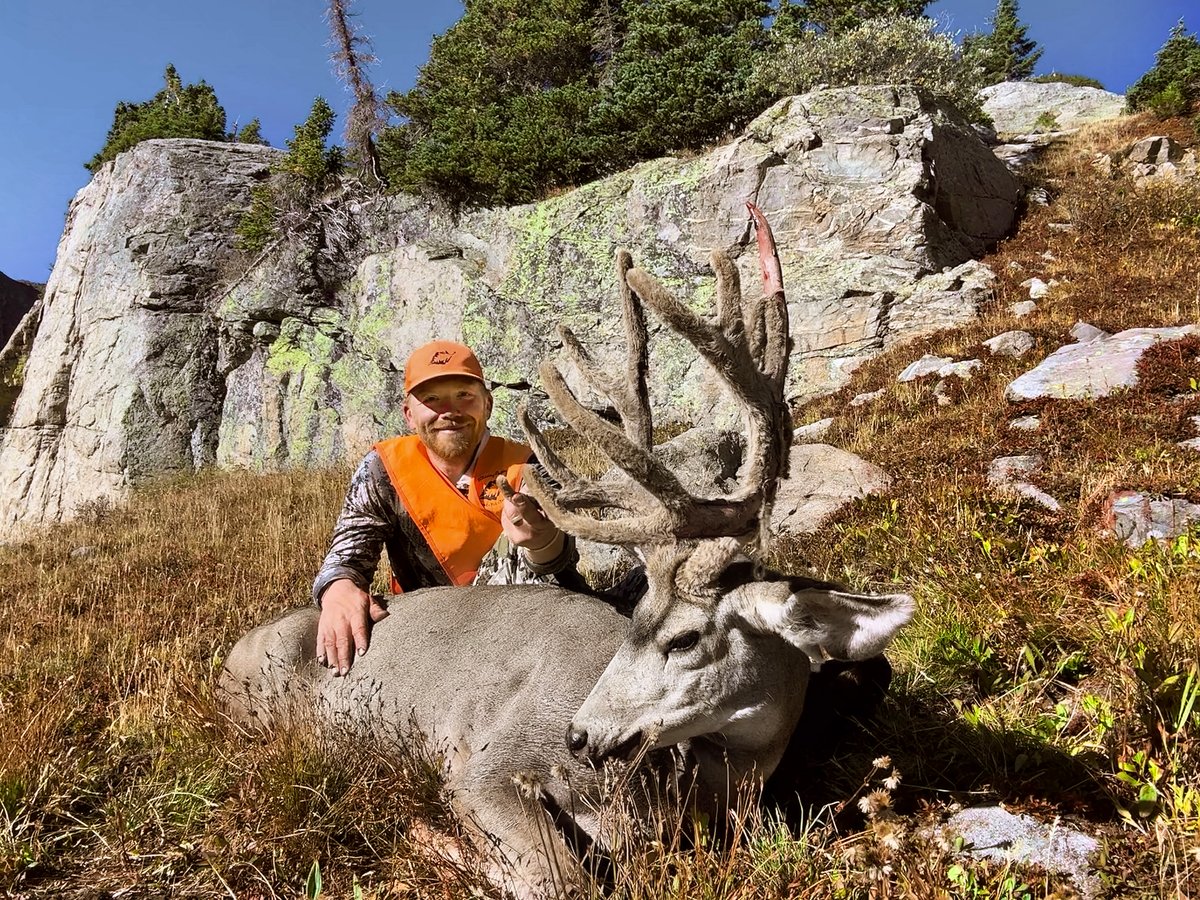
Heavy, tall, extra tine, and glowing velvet. The biggest muley I’d ever laid eyes on.
The buck I’d come to Colorado for.
I moved carefully—ten yards at a time through loose scree. Stop. Glass. Range. Repeat. When I reached a grassy bench inside my effective range, I laid prone, confirmed wind, verified level, and waited.
The buck stepped out broadside.
I pressed the trigger.
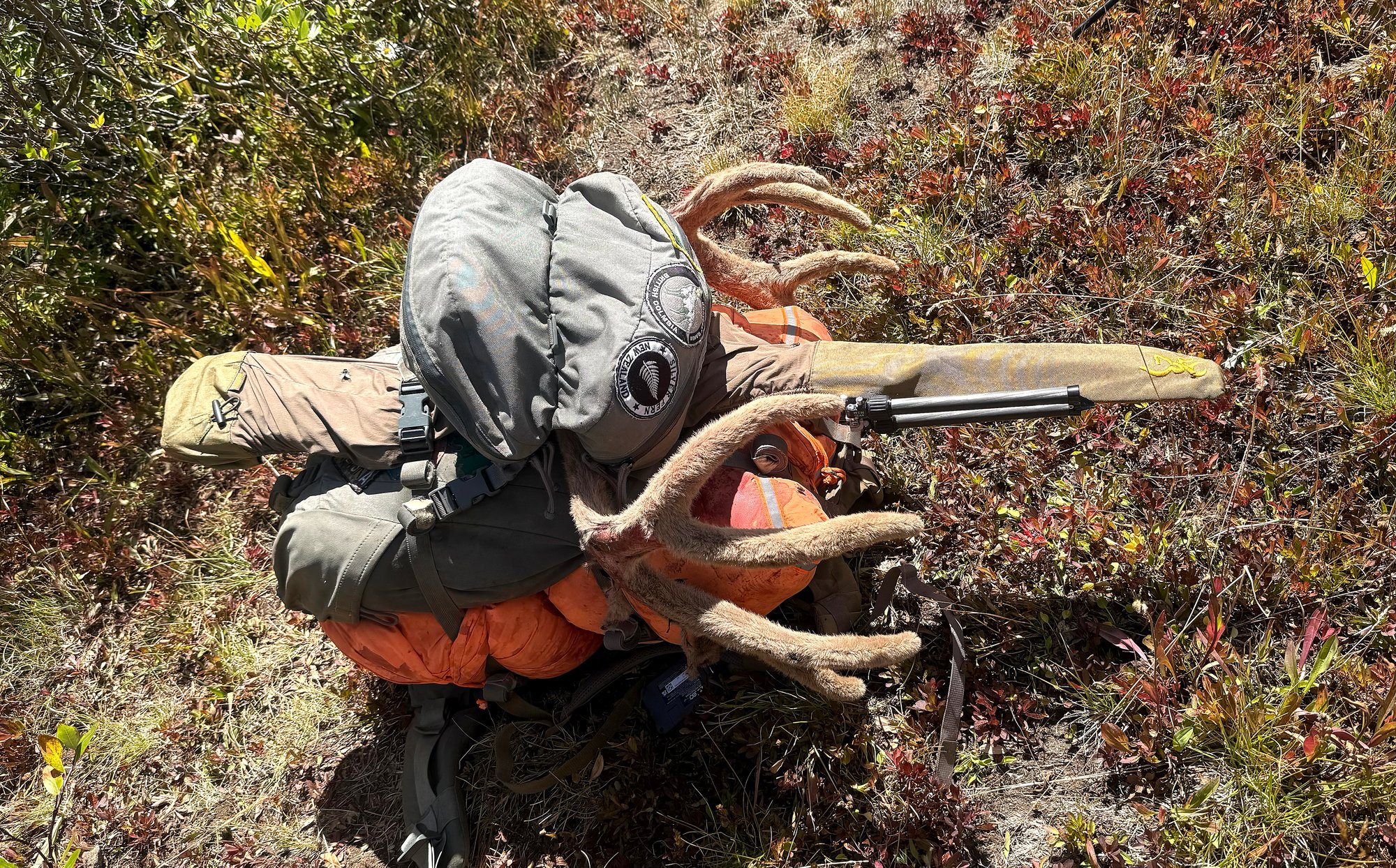
He ran downhill through the rocks, head low, then tumbled and came to rest in an open patch of grass. On day ten, it had finally come together. The buck was everything I’d hoped for. Unfortunately, on his tumble down through the rocks, he’d beat up his velvet, but that was okay. I’d done it. I’d accomplished my goal. I took photos, sent messages, and began the pack-out, making it to the truck before dark—5.3 miles with meat, cape and antlers.
Day 11
The next day, I packed back in for camp. Ten more miles. Along the trail, I encountered a bull moose and a cow at fifteen yards. Love was in the air as the big bull grunted, walking up the trail. It felt like a fitting ending.
A true high-country adventure—and a hunt I’ll never forget.