January 2026
Mule Deer Hunting | Wyoming
Story By: Andy Pope
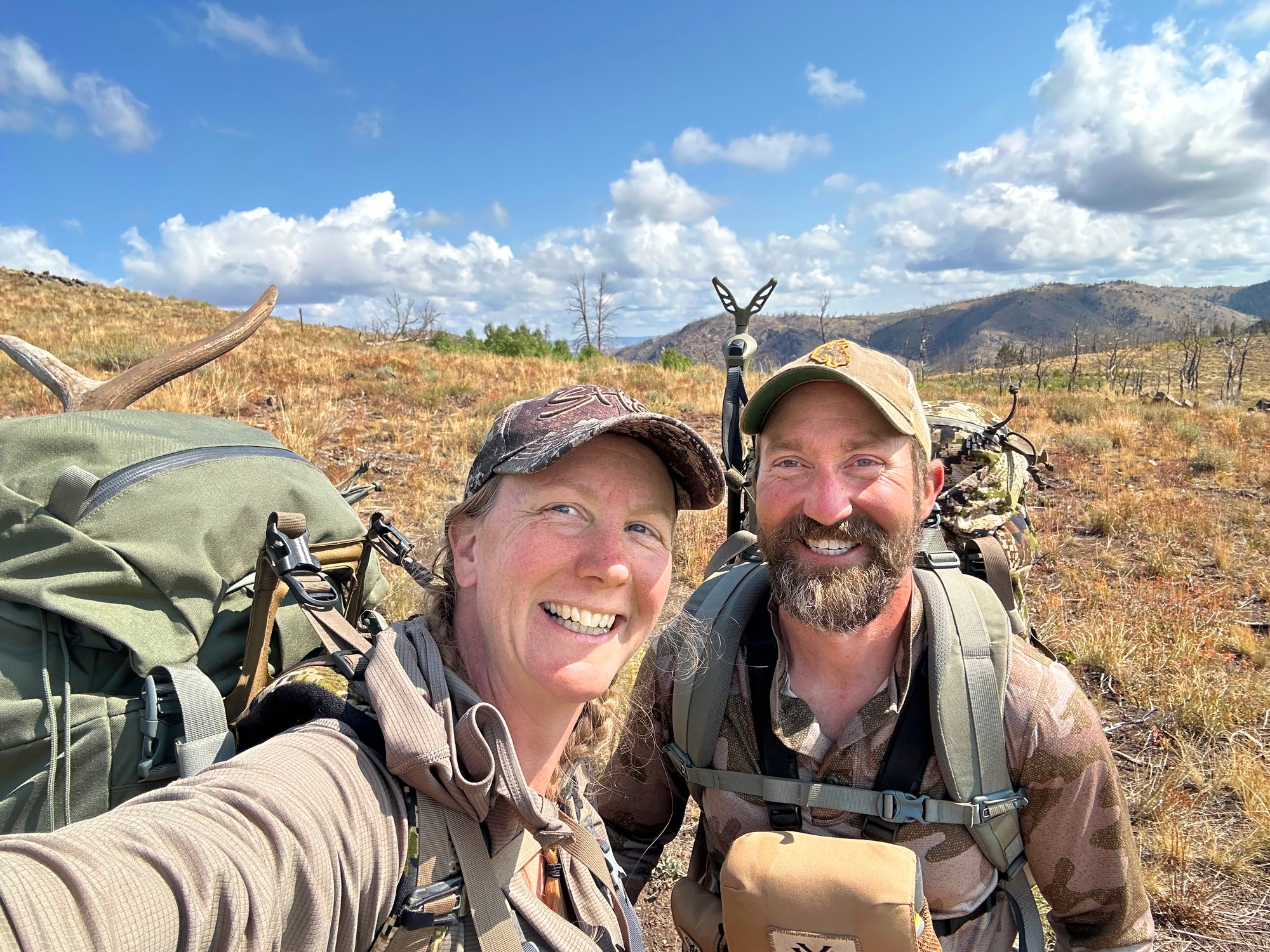
My wife, Stephanie (Steph), and I have been on several Wyoming hunting trips with our friends Tim Dahlen and Matt Manke. Tim and I had racked up a number of deer points, so this year, we decided to cash in our points to hunt a unit in Southern Wyoming. Since none of us had spent any time in that part of the state, we decided to break the hunt up into two trips with the first week being an early season archery hunt and scouting trip. Then, if we didn’t fill our tags, the plan was to come back before the rifle opener and hunt the opening week.
Prior to the first trip, we each did hours of e-scouting and I talked to a Huntin’ Fool Advisor and the biologist in that area a couple of times. We settled in on an old burn that we confirmed was very glassable, and learning that several of the creeks within the burn held water year-round was the detail that solidified where we wanted to start.
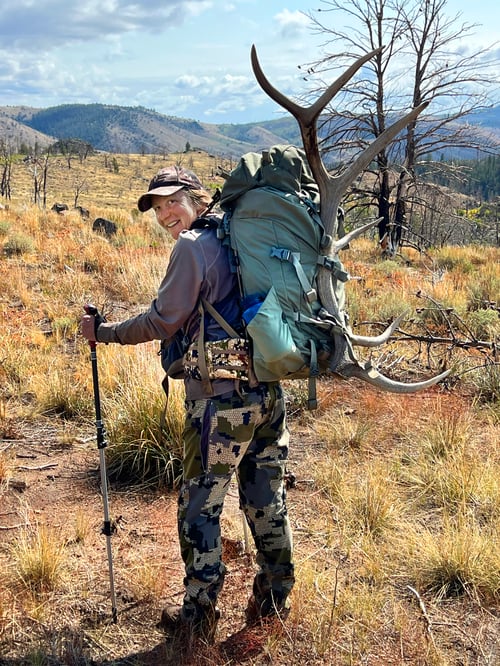
While we didn’t fill our tags during the archery hunt, we got some spike camping in. We found a big 6-point elk shed, and we did have success in finding a few different bucks that we were very interested in. While disappointed we couldn’t make it work during archery, we felt we had options when we came back for the rifle hunt.
Matt and Steph had work obligations, so it was just Tim and me on the return trip. We had almost two full days to scout and try to either find the bucks from the archery trip or turn up a couple of new ones. Warm weather meant deer activity was low, and we didn’t see a buck until about 15 minutes of light left on the day before the opener. Tim found a shooter up at the top of a ridge. He thought it looked like a good 4x4 with deep forks on at least one of the G2s. That’s the only buck we saw in the last two days, so there wasn’t much of a decision as to where we were going to start.
On opening morning, we hiked into the same vantage points as the night before, and by 10 a.m., we had seen 15 deer between the two of us, with four of them being bucks. While we were happy with the number of deer, none of the bucks were close to being 3 years old. While we ate lunch, we discussed a plan for the rest of the day. Tim moved a short distance to a different glassing spot, and I decided to hike up the main ridgeline a couple miles to try to look into a few different draws.
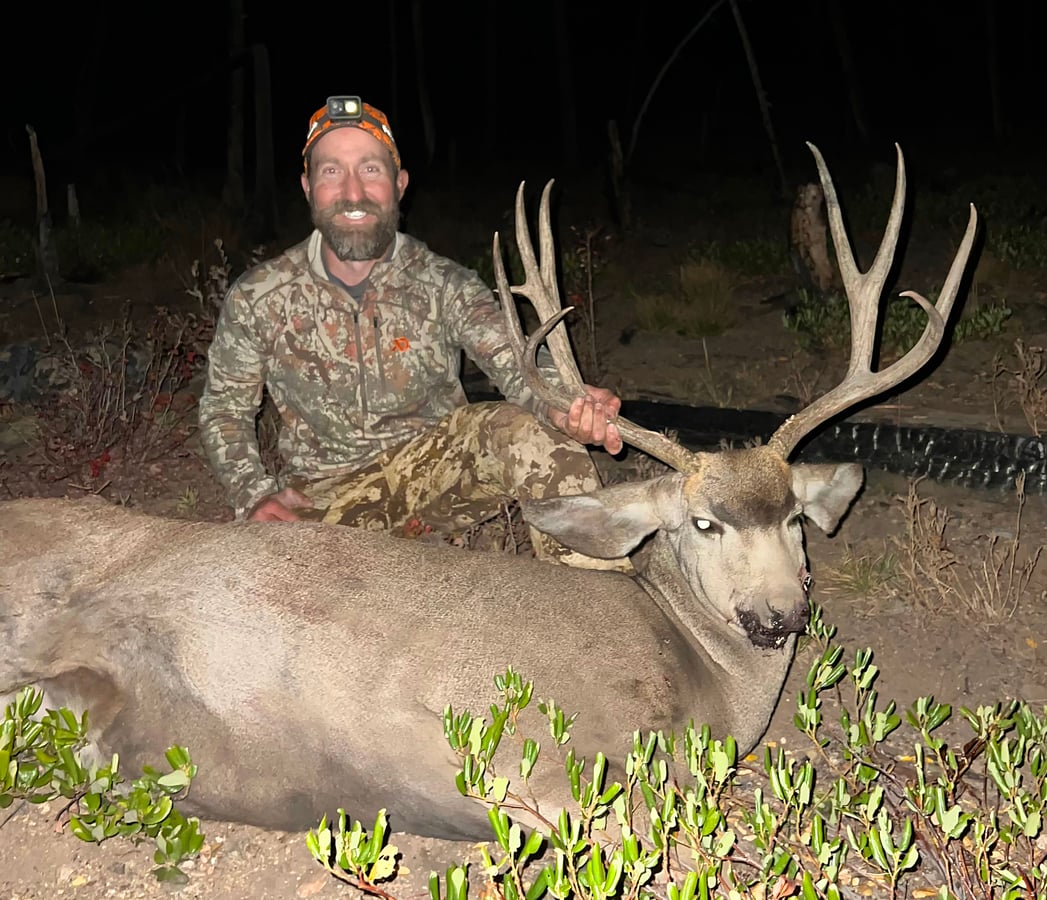
With about 45 minutes of light left, I spotted a doe 450 yards away, and then a couple minutes later, I saw what looked like a nice buck trailing behind her. They were angling down a draw, and there were two rises between us. I quickly got my gear together and started moving their direction. I got to 330 yards from where I last saw them, but they had dipped lower and there was a rise between us still. I kept moving in what I thought was a straight path to intersect them if they kept going downhill. As I made it to the last high point, I could see almost the entire opposite side of the ravine. Looking around, I finally saw a deer straight across from me, standing broadside at 150 yards. The deer I thought was a doe was actually a smaller buck, and although he was watching me, he did not act alarmed. Knowing the other buck had to be close, I dropped down in the prone position and kicked out my bipods. I couldn’t see the bigger buck, but eventually the smaller one broke his stare at me and gave away his location. He was feeding in some small aspen in the middle of the ravine, but then, as if on cue, he walked over and stood almost perfectly broadside from me. I took the safety off and slowly squeezed the trigger.
I could tell he was hit hard. He ran sidehill about 40 yards when I lost sight of him. After an agonizing 15 minutes, I walked over to where the deer was when I shot him. I got to the center of the ravine and just started going up the other side when I stopped to glass the few downed logs in the direction the buck had gone. The first two were confirmed trees, but when I got to the third, part of the trunk looked like a deer. Then I saw a tall, forked G2 sticking in the air. The buck looked huge! I probably stood there for several minutes almost in shock about what had happened. Then I thought, “I have to get Tim!” I had to tell myself to slow down. There was a lot of work to do, but there was no rush at all. I put my headlamp on, tagged the buck, and hiked out to meet Tim.
Once I briefly shared what had happened, we hiked back in, took some pictures, and got to work. It was midnight by the time we got back to camp. We slept in and spent some time taking care of the meat the next morning. Then it was time to start looking for another buck.
We decided to go to a different area where we had seen a bachelor group during the archery season. We got to the glassing spot after 3 p.m. We got situated and started glassing the first draw coming off the ridge. After about 10 minutes, I spotted a doe feeding. Then I caught a glimpse of a deer turning around under a rock ledge. Tim thought I was joking when I calmly said, “Shooter.” Then he could hear my growing excitement when I said it again. The buck was just stretching his legs, and after a couple minutes, he laid back down and all we could see was his head and antlers. His G2s looked tall and just to the outside of his ears, so there was no doubt Tim was going to try for him. The buck was at 570 yards, so Tim quickly picked a route to get on the ridge and then work to the south. He had to get in a position above a rock outcropping and wait for the buck to feed out, realizing that might not happen for a couple of hours.
I stayed in my glassing spot and was able to watch the entire stalk play out. It took Tim about half an hour to get above the deer and start working down towards a rock ledge the buck was bedded under. Tim settled in on top of a large boulder, and after about 20 minutes, the buck stood back up and started eating. He slowly walked in the opposite direction from where I was and angling slightly uphill towards Tim. I was worried the buck would wind Tim before he gave him a shot, but eventually, he took a couple steps up and to the side of the rock face. Just when I thought he might be visible to Tim, I saw the deer flip over quickly followed by the delayed report of the rifle. The shot was right on the mark, and the deer never got back on his feet.
This was a much easier hike out, which after the night before, we appreciated. As I was setting up to take a few pictures, I asked where the shot placement was. We started looking over the deer but did not see any holes. We noticed that one of the ears was almost torn in half and there was dried blood around it. We then realized a bullet had grazed the front base of his left antler and hit the back base of the right antler before blowing through the middle top of his right ear. I looked at Tim, a little dumbfounded, and said “Did you just deliver a knockout punch without hitting the deer?” It feels a little silly now, but we couldn’t find an entrance or exit hole at first, and now we weren’t sure he was dead! Out of sheer paranoia, we cut the jugular, but the deer did not bleed, confirming he was not alive. Once we started pulling the hide back, we saw that Tim did hit where he was aiming right behind shoulder, but the 6.5mm hole had creased over when he fell so no blood had come out. Tim breathed a sigh of relief. He would never live down an antler knockout shot at 70 yards.