June 2026
INTO THE ALBERTA HIGH COUNTRY | Alberta Mule Deer Hunt
Story By: John Martin
What was supposed to be my father and uncle’s second Alberta hunt turned into a father-son adventure. The year before, Dad and my uncle had taken fine farmland bucks there, but this time they wanted the backcountry, horseback-style experience we’d all shared in years prior. With guidance from a Huntin’ Fool consultant, Dad booked a six-day horseback hunt with one of Huntin’ Fool’s longtime outfitters in the Alberta foothills.
At eighty-three, my father is still a dedicated horseman. A former dairy farmer and longtime trail boss for multi-day Sierra Nevada rides, he’s far more comfortable in a saddle than in a recliner. After decades of out-of-state hunts for deer, elk, and antelope as well as bird hunts with my uncle, his western points no longer matched his years. Alberta’s outfitter-allocated licenses promised a real chance at a quality buck without waiting decades.
When my uncle had to cancel, I eagerly stepped in. After juggling work schedules and vacation time, we loaded Dad’s pickup with our gear and set out on the two-day drive from California’s coast to Alberta. We spent a night in Banff, riding the gondola to the top of Sulphur Mountain the next day before heading to our outfitter’s home base that afternoon, ready for the hunt to begin.
We were greeted by a couple of sleek, friendly Bluetick hounds and our guide, Paul. His daughter joined us as cook and wrangler, and his wife served a hearty dinner before we turned in for the night.
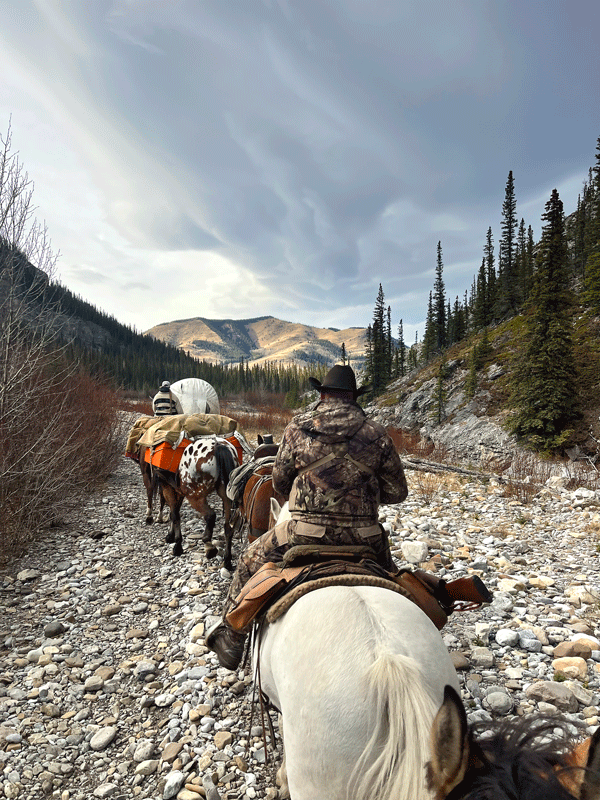
The next morning, we saddled four riding horses and two pack horses and hitched a team of drafts to a wagon loaded with feed and duffels. The family’s Redbone hound trotted alongside as we made the ten-mile climb into camp. The setup was impressive—tent cabins, cook tent, generator, corrals, and a heated tack tent surrounded by electric fencing. That evening, clouds rolled in, and a cold wind brought a mix of rain and snow as the sun disappeared behind the peaks.
Day 1
We woke to the sound of rain on canvas, and there was a hot breakfast waiting. In rain gear, we climbed a ridge above camp before daylight. Low clouds and swirling snow ruined visibility, so we built a small fire to wait out the weather. By afternoon, we conceded the day to the deer and returned soaked but grateful for the tent stove and another warm meal.
Day 2
Morning light revealed a blanket of snow at higher elevations—perfect for tracking. Paul joked that glassing the burned ridges was like “looking for a sleeping flea on a porcupine.” His sharp eyes picked out distant deer we could barely see. The cold and wind made glassing a challenge, so Paul built a fire to warm our hands and joints before we continued. We spotted a few small bucks but nothing worth a stalk. He reminded us that pre-rut bucks roamed widely and might move into range later. We rode home under a bright moon, the snow glistening on the trail.
Day 3
Dad stayed in camp to rest while Paul and I explored a new drainage. The climb offered breathtaking views of the Canadian Rockies—or maybe it was just the 7,800-foot elevation stealing my breath. The trail down through windfalls and snow was rough, but the horses handled it with calm precision. Their mountain sense amazed me—steady feet and quiet confidence through icy tangles of timber.
By afternoon, we found cougar tracks on our trail and melted snow where the cat had lain watching. Later we spotted a wide-racked buck across a distant canyon, too far to reach before dark. Spirits lifted, we rode back by moonlight to the comfort of the campfire glow.
Day 4
Rested and ready, Dad joined us on a clear morning. We hadn’t gone far when we surprised a feeding buck and froze, unprepared. Paul calmly reviewed how to handle the next encounter, and Dad decided I’d take the next shot—his choice, he said, because I’d react quicker and hear whispered directions better.
We spent the sunny day glassing new ridges and soaking up the warmth. Paul hiked out ahead, covering ground like a mountain goat, spotting a nice buck below us that slipped away unseen. The moon had deer feeding at night, and we all quietly hoped for clouds and wind to push them into daylight movement.
Day 5
The previous day’s missed chance replayed in my head as we rode the familiar trail to our glassing knob. My eyes scanned constantly. When Paul spotted a heavy-bodied buck just over a crest, I dismounted too fast, stumbled into a snowdrift, and ended up on my back staring up at my startled horse. Embarrassed, I remounted and followed quietly.
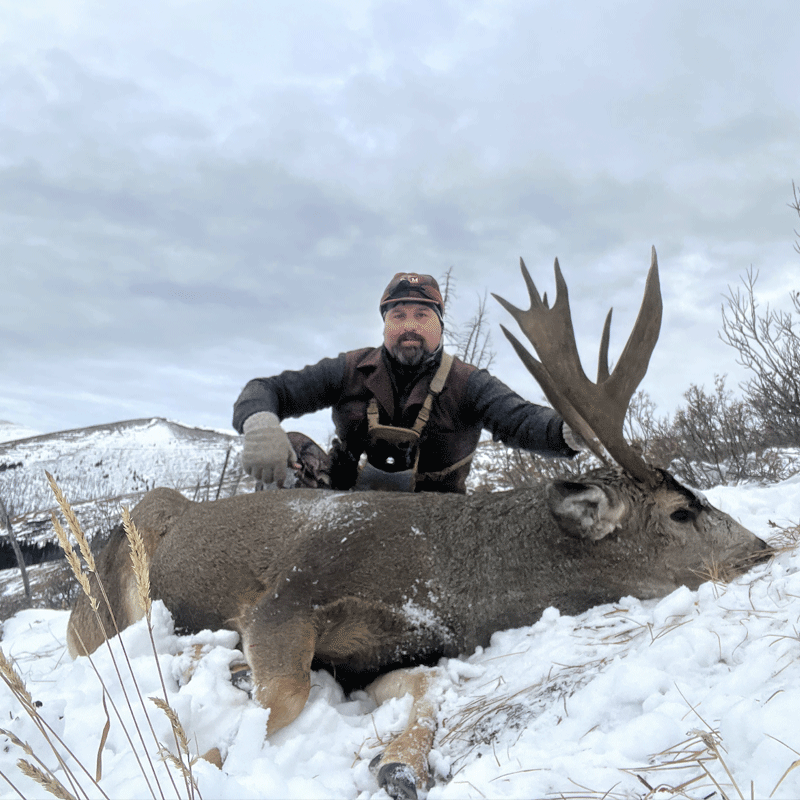
A few hundred yards later, we saw the buck again. This time, I slipped off carefully, handed Paul my reins, and crept toward the deer. When he turned broadside at 150 yards, I steadied my breathing and fired offhand. The buck flinched and disappeared. Moving slowly uphill, I caught sight of his rump in the willows and put a second shot into his chest at a quartering angle. He reared, stumbled, and slid to rest on the snowy slope.
It was 8 a.m. I took photos and began dressing the deer while Dad and Paul checked other ridges. When they returned three hours later, we shared handshakes and smiles. We loaded one of the packhorses, Cisco, with quarters, ribs, backstraps, tenderloins, and the cape—Paul’s expert hitch securing the load for the descent.
Back at camp, we celebrated early and finished caping my deer. The horses, patient and sure-footed, had carried us through steep terrain that would have broken lesser stock.
Day 6
Before dawn, we rode again, hoping Dad would find his buck. The sunrise turned the snowy valley gold and pink. Soon after we started glassing, Paul spotted a deer 550 yards up the canyon. We tied up and began a careful stalk through deep willows and crusted snow, using the terrain for cover.
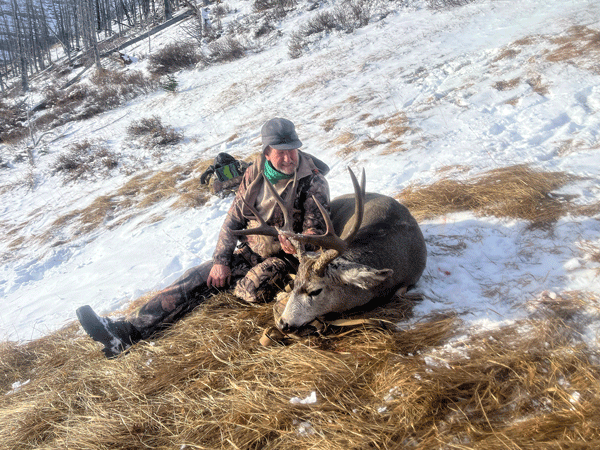
After a slow advance, we reached a downed log for a rest. The buck appeared 300 yards away, staring at us through the burned timber. Dad steadied his .264 Winchester, fired, and we all heard the solid hit. The buck turned uphill, and, after a few follow-up shots, a final bullet behind the shoulder dropped him on the steep slope.
Paul and I fetched the horses while Dad climbed on foot. We met him halfway up the hill, breathless but beaming. When he reached down to hold the heavy 4x4 rack with tall eyeguards, his face said everything—exhaustion, pride, and deep satisfaction.
At eighty-three, he’d just taken a fine mountain mule deer in rugged country most men half his age would find brutal. The thin air and cold drained us both, but the horses carried us faithfully through nearly 70 miles that week. Watching Dad persevere brought back memories of my youth—him leading me through canyons, teaching me to hunt, to ride, to respect the land.
We shared lunch, looking out over the valley and peaks dusted white under a blue sky. Paul expertly caped and quartered the deer, loaded the horses, and led us home through the crisp afternoon. The clatter of hooves on frozen ground echoed between the mountains.
Reflections
There were moments during that week when we both doubted we’d fill our tags. The country was steep, the air thin, and the weather unforgiving. But the horses were steady, the guide skilled, and Dad’s grit unshakable.
Hunting from horseback in those Alberta mountains felt like stepping back in time—firelight flickering on canvas tents, the steady breath of horses in the cold, and the satisfaction of honest work in wild country.
As we left camp for the last time, I looked back at the snowy ridges glowing in the morning sun. My deer was loaded, Dad’s buck lay securely packed, and the horses moved with quiet confidence down the frozen trail.
The experience was everything we’d hoped for—a true backcountry adventure and a reminder of the power of good horses, a skilled outfitter, and the enduring spirit of an old cowboy who still belongs in the mountains.