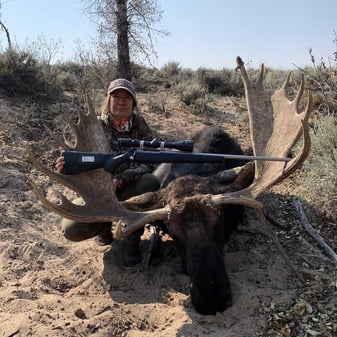
Smokey the Moose
| UP-FRONT FEES | |
| Annual Small Game Hunt License (Required to Apply) | $104.86 |
| Youth Annual Small Game Hunt License (Under Age 18, Required to Apply) | $2.53 |
| Habitat Stamp (Required to Apply, Adults Only) | $12.76 |
| Draw Application (Per Species) | $11.00 |
| Preference Point Fee (Per Species for Sheep, Moose, and Mtn Goat) | $100.00 |
| Preference Point Fee (Per Species for Deer, Elk, and Antelope) | $0.00 |
| Youth Preference Point Fee (All Species) | $0.00 |
| All non-resident licenses include an annual fishing license valid through March 31 | |
| POST DRAW FEES (IF SUCCESSFUL) | |
| Rocky / Desert Bighorn Sheep | $2,758.49 |
| Shiras Moose | $2,758.49 |
| Mountain Goat | $2,823.53 |
| Elk (Bull, Cow, or Either Sex) | $845.16 |
| Deer | $506.92 |
| Antelope | $506.92 |
| Black Bear | $302.56 |
| Mountain Lion | $825.03 |
| Turkey | $188.86 |
| Youth Big Game (Deer, Elk, and Antelope) | $130.07 |
| Youth Black Bear | $64.10 |
| Youth Turkey | $126.49 |
| UP-FRONT FEES | |
|---|---|
| Annual Small Game Hunt License (Required to Apply) | $38.49 |
| Youth Annual Small Game Hunt License (Under Age 18, Required to Apply) | $2.53 |
| Habitat Stamp (Required to Apply, Adults Only) | $12.76 |
| Draw Application (Per Species) | $8.93 |
| Preference Point Fee (Per Species for Sheep, Moose, and Mtn Goat) | $50.00 |
| Preference Point Fee (Per Species for Deer, Elk, and Antelope) | $0.00 |
| Youth Preference Point Fee (All Species) | $0.00 |
| POST DRAW FEES (IF SUCCESSFUL) | |
| Rocky / Desert Bighorn Sheep | $385.66 |
| Shiras Moose | $385.66 |
| Mountain Goat | $385.66 |
| Elk (Bull, Cow, or Either Sex) | $70.40 |
| Deer | $51.25 |
| Antelope | $51.25 |
| Black Bear | $64.01 |
| Mountain Lion | $64.02 |
| Turkey (Spring) | $38.49 |
| Turkey (Fall) | $32.11 |
| Youth Big Game (Deer, Elk, and Antelope) | $20.30 |
| Youth Black Bear | $19.93 |
| Youth Turkey | $20.62 |
| COLORADO ELK SEASON DATES | |
| Archery | Sept 2 – Sept 30, 2026 |
| Muzzleloader | Sept 12 – Sept 20, 2026 |
| Early Rifle (Limited Units) | Oct 1 – Oct 11, 2026 |
| 1st Rifle | Oct 14 – Oct 18, 2026 |
| 2nd Rifle | Oct 24 – Nov 1, 2026 |
| 3rd Rifle | Nov 7 – Nov 15, 2026 |
| 4th Rifle | Nov 18 – Nov 22, 2026 |
| COLORADO DEER SEASON DATES | |
| Archery | Sept 2 – Sept 30, 2026 |
| Muzzleloader | Sept 12 – Sept 20, 2026 |
| Early Rifle (Unit-Specific) | Sept 12 – Sept 20, 2026 |
| 1st Rifle | Oct 14 – Oct 18, 2026 |
| 2nd Rifle | Oct 24 – Nov 1, 2026 |
| 3rd Rifle | Nov 7 – Nov 15, 2026 |
| 4th Rifle | Nov 18 – Nov 22, 2026 |
| COLORADO ANTELOPE SEASON DATES | |
| Archery | Aug 15 – Sept 20, 2026 |
| Muzzleloader | Sept 21 – Sept 29, 2026 |
| Rifle | Oct 3 – Oct 11, 2026 |
| COLORADO MOOSE SEASON DATES | |
| Archery | Sept 12 – Sept 30, 2026 |
| Muzzleloader | Sept 12 – Sept 20, 2026 |
| Rifle | Oct 1 – Oct 14, 2026 |
| COLORADO MOUNTAIN GOAT SEASON DATES | |
| Archery (Unit-Specific) | Sept 1 – Nov 1, 2026 |
| Rifle (Unit-Specific) | Sept 1 – Oct 23, 2026 (varies by GMU) |
| COLORADO BEAR SEASON DATES | |
| Archery | Sept 2 – Sept 30, 2026 |
| Muzzleloader | Sept 12 – Sept 20, 2026 |
| Sep Rifle | Sept 2 – Sept 30, 2026 |
| 1st Rifle | Oct 14 – Oct 18, 2026 |
| 2nd Rifle | Oct 24 – Nov 1, 2026 |
| 3rd Rifle | Nov 7 – Nov 15, 2026 |
| 4th Rifle | Nov 18 – Nov 22, 2026 |
| COLORADO DESERT BIGHORN SHEEP SEASON DATES | |
| Rifle | Nov 1 – Nov 30, 2026 |
| COLORADO ROCKY MOUNTAIN BIGHORN SHEEP SEASON DATES | |
| Archery | Aug - Dec 2026 (by GMU) |
| Rifle | Aug – Dec 2026 (by GMU) |
Disclaimer: Season dates vary by GMU, weapon type, and draw status. Always confirm with Colorado Parks & Wildlife: https://cpw.state.co.us/thingstodo/Pages/SeasonDates.aspx
| YEAR | SHEEP & GOAT | MOOSE | ELK | DEER | ANTELOPE | BEAR | SECONDARY DRAW |
|---|---|---|---|---|---|---|---|
| 2026 | April 23 | May 26 | May 28 | May 27 | May 29 | May 26 | July 7 |
| 2025 | April 16 | May 27 | May 29 | May 28 | May 30 | May 27 | July 7 |
| 2024 | April 16 | May 28 | May 29 | May 29 | May 30 | May 28 | July 8 |
| 2023 | April 18 | May 30 | June 1 | May 31 | June 2 | - | July 7 |
| 2022 | April 19 | May 31 | June 3 | June 2 | June 2 | - | July 7 |
| 2021 | April 20 | May 25 | May 26 | May 25 | May 26 | - | July 6 |
| 2020 | May 1 | June 1 | June 4 | June 3 | June 4 | - | - |
| 2019 | May 3 | - | June 5 | June 5 | June 5 | - | - |
| 2018 | May 4 | - | - | - | - | - | - |
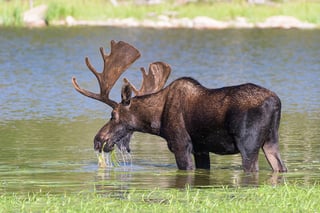
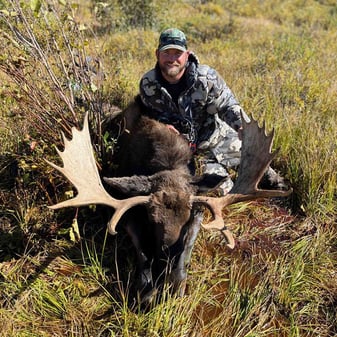
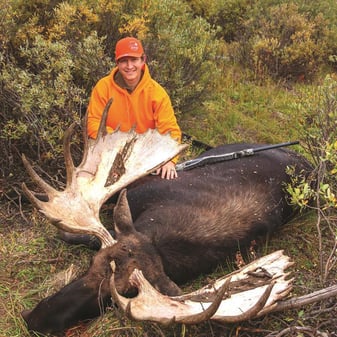
Possibly the greatest wildlife success story of the last half century that no one talks about is the Colorado moose. Growing from being nearly nonexistent in the seventies and eighties to an estimated 3,600 animals in 2025, the moose population has really ballooned in the last twenty-five years—mainly due to sound management, prime habitat, and a low number of large carnivores allowing for high calf recruitment. Compared to its neighbors to the north, all of whom are dealing with wolves and grizzly bear predation of moose, Colorado has a very high percentage of bulls and cows reaching their prime years and reproducing. The downside of this is that more hunters are looking at and applying in Colorado for that coveted once-in-a-lifetime tag, leading to steeper draw odds in the state.
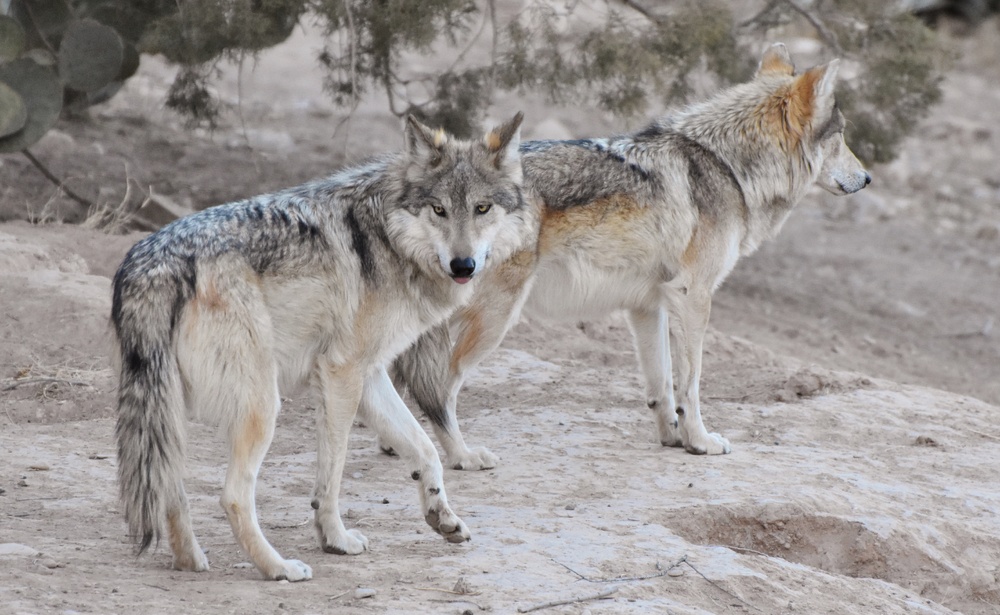
With moose numbers continuing to increase, more non-resident hunting opportunities are becoming available every year. There is definitely a lot to be excited about when it comes to moose in Colorado, but wolves have the potential to dampen that excitement. CPW has been reintroducing gray wolves into the state since 2023, giving the moose a new predator. It’s obvious what will happen to moose if a wolf population establishes itself and grows—just look at its northern neighbor, Wyoming. Wolves and grizzlies taken down more moose than all hunters combined each year. As of early 2026, Colorado has put a halt on reintroducing any more wolves. Add to that the fact that, to date, eleven of the original twenty-five have died, and it starts to seem that the Pinnacle the moose population in the Centennial State may still be ahead of us. For now, Colorado remains a great place to try and draw a Shiras moose tag if that is on your bucket list.
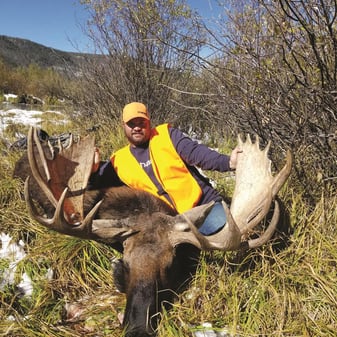
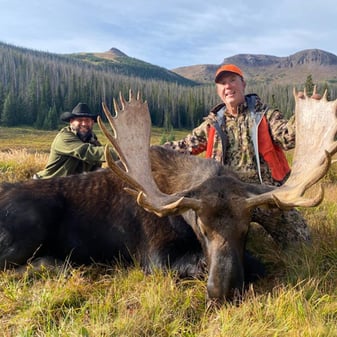
Colorado currently has thirteen data analysis units statewide with huntable moose populations. Every single one of them is capable of producing 40”+ bulls, with some pushing the 50” mark each season. Most of these units are higher elevation mountain basins with high riparian willow and aspen stands lining the canyon bottoms (a.k.a. ideal moose habitat). Pay attention to unit comments to figure out which units have the type of terrain that will suit your hunting style and have access to enough public land if you plan to self-guided. Breaking down and hauling a moose out for miles from above 10,000 feet can be an overwhelming task for hunters who are not prepared for it.
Online applications must be submitted by 8 p.m. (MDT) on April 7, 2026.
Our magazine, which is available in print and online, has everything in one location - application info, draw details and odds, fees, hunter requirements, point structure, age restrictions, youth information, weapon restrictions, other tag opportunites, hunt planning, and much more. If you would like access to all of our research, join today!
Take the stress out of application season and hunt with confidence.
Huntin’ Fool’s Application Service handles every detail for you—building the best strategy, maximizing your draw odds, and making sure you never miss a deadline.
We apply. You hunt.
Advisor Articles from Our Magazine on Colorado Application and Hunting Strategy
If Colorado’s moose hunting has a downside, it’s the cost. Since the 2019 price increases, it has become one of the more expensive states for moose due to the out-of-pocket cost of a permit. Even if you’re unsuccessful in the draw, building a point will cost you $100. In the end, if you’re looking for a trophy class bull, or just a chance to hunt Shiras moose, Colorado is a must-apply-in state.
In 2025, the state issued 712 total permits. Seventy of those went to non-residents, thirty of which were bull tags. Those numbers were up fifty-three total permits and six non-resident permits from 2024. 2026 moose permit numbers will not be set until the April commission meeting.
Colorado offers three weapon choices (archery, muzzleloader, and rifle) with varied season dates associated with each. Dates for 2026 are as follows: a September 12 through 30 archery season; season, a September 12 through 20 muzzleloader season, and an October 1 through 14 rifle season. Successful bull moose applicants have the luxury of hunting all three seasons with their permit. Successful cow moose applicants are limited to hunting in one season, unless they draw the L-1R hunt giving them four season dates to hunt with a rifle.
Colorado has a reissue policy for limited licenses that are turned in after the draw. A returned license that took five or more preference points to draw will be manually reissued to the next eligible person. CPW will start by contacting the next five people from the current year’s draw order and attempt to reissue it. If none of those five accept, the license will be added to the leftover list. If a non-resident returns a license, it will be reallocated to a non-resident. Any returned license that took fewer than five preference points to draw will be placed on the leftover list. Colorado will issue any tag surrendered after the initial leftover license availability webpage. They will release a list of available permits each Tuesday and transfer them to the leftover list for purchase each Wednesday at 11 a.m. MT.


Colorado has raffle and auction Governor-type permits. For more information, go to https://cpw.state.co.us/activities/hunting/big-game/auction-and-raffle-licenses. You can also refer to the article “Governor, Commissioner, and Conservation Tags” in our January 2026 issue.
Colorado also has a landowner voucher program. Up to ten percent of private-land-only and ten percent of unit-wide permits for deer, elk, and antelope licenses for both the general and restricted quota west of I-25 may be issued as landowner vouchers. East of I-25, up to fifteen percent of elk, and antelope licenses for the general quota and up to ten percent of licenses for the land restricted quota may be issued as landowner vouchers.
CPW has put a halt on translocating and releasing any further wolves this season. They will continue to explore options for translocations in the winter of 2026/2027. U.S. Fish and Wildlife Service requested additional information from CPW to ensure that the 10(j) rule and state management plan are being carefully considered in all wolf related management actions. The U.S. Fish and Wildlife noted that they may take further action based on future information provided to them by CPW. CPW intends to comply and provide requested data going back to December 12, 2023. Revoking the state’s authority to manage wolves and turning management over to the federal government would mean moving away from non-lethal methods of removing lethal ones. To date, of the twenty-five wolves released, eleven have died. The Colorado Cattlemen’s Association has been pushing for a pause to allow the state to create better loss control measures to deter wolves and to allow the state to catch up on loss payments to livestock producers after confirmed losses or claims for depredation have depleted funds. The state’s general fund allocated $350,000 annually to compensate ranchers. In 2025 alone, Colorado ranchers submitted claims that exceeded $1 million.
On another note, as of the time of this writing, the Pet and Livestock Protection Act has passed the house and is awaiting senate vote. This bill removes the gray wolf from the list of endangered and threatened wildlife, which could further hinder Colorado’s wolf reintroduction program. In summary, the state was not fully prepared for the outcomes and problems that the reintroduction of wolves has created.
At Huntin' Fool, we are always looking for ways to improve our service and help out members to the very best of our abilities. We believe communication is what makes our Huntin' Fool community great!