The Colorado Monarch
| UP-FRONT FEES | |
| Annual Small Game Hunt License (Required to Apply) | $104.86 |
| Youth Annual Small Game Hunt License (Under Age 18, Required to Apply) | $2.53 |
| Habitat Stamp (Required to Apply, Adults Only) | $12.76 |
| Draw Application (Per Species) | $11.00 |
| Preference Point Fee (Per Species for Sheep, Moose, and Mtn Goat) | $100.00 |
| Preference Point Fee (Per Species for Deer, Elk, and Antelope) | $0.00 |
| Youth Preference Point Fee (All Species) | $0.00 |
| All non-resident licenses include an annual fishing license valid through March 31 | |
| POST DRAW FEES (IF SUCCESSFUL) | |
| Rocky / Desert Bighorn Sheep | $2,758.49 |
| Shiras Moose | $2,758.49 |
| Mountain Goat | $2,823.53 |
| Elk (Bull, Cow, or Either Sex) | $845.16 |
| Deer | $506.92 |
| Antelope | $506.92 |
| Black Bear | $302.56 |
| Mountain Lion | $825.03 |
| Turkey | $188.86 |
| Youth Big Game (Deer, Elk, and Antelope) | $130.07 |
| Youth Black Bear | $64.10 |
| Youth Turkey | $126.49 |
| UP-FRONT FEES | |
|---|---|
| Annual Small Game Hunt License (Required to Apply) | $38.49 |
| Youth Annual Small Game Hunt License (Under Age 18, Required to Apply) | $2.53 |
| Habitat Stamp (Required to Apply, Adults Only) | $12.76 |
| Draw Application (Per Species) | $8.93 |
| Preference Point Fee (Per Species for Sheep, Moose, and Mtn Goat) | $50.00 |
| Preference Point Fee (Per Species for Deer, Elk, and Antelope) | $0.00 |
| Youth Preference Point Fee (All Species) | $0.00 |
| POST DRAW FEES (IF SUCCESSFUL) | |
| Rocky / Desert Bighorn Sheep | $385.66 |
| Shiras Moose | $385.66 |
| Mountain Goat | $385.66 |
| Elk (Bull, Cow, or Either Sex) | $70.40 |
| Deer | $51.25 |
| Antelope | $51.25 |
| Black Bear | $64.01 |
| Mountain Lion | $64.02 |
| Turkey (Spring) | $38.49 |
| Turkey (Fall) | $32.11 |
| Youth Big Game (Deer, Elk, and Antelope) | $20.30 |
| Youth Black Bear | $19.93 |
| Youth Turkey | $20.62 |
| COLORADO ELK SEASON DATES | |
| Archery | Sept 2 – Sept 30, 2026 |
| Muzzleloader | Sept 12 – Sept 20, 2026 |
| Early Rifle (Limited Units) | Oct 1 – Oct 11, 2026 |
| 1st Rifle | Oct 14 – Oct 18, 2026 |
| 2nd Rifle | Oct 24 – Nov 1, 2026 |
| 3rd Rifle | Nov 7 – Nov 15, 2026 |
| 4th Rifle | Nov 18 – Nov 22, 2026 |
| COLORADO DEER SEASON DATES | |
| Archery | Sept 2 – Sept 30, 2026 |
| Muzzleloader | Sept 12 – Sept 20, 2026 |
| Early Rifle (Unit-Specific) | Sept 12 – Sept 20, 2026 |
| 1st Rifle | Oct 14 – Oct 18, 2026 |
| 2nd Rifle | Oct 24 – Nov 1, 2026 |
| 3rd Rifle | Nov 7 – Nov 15, 2026 |
| 4th Rifle | Nov 18 – Nov 22, 2026 |
| COLORADO ANTELOPE SEASON DATES | |
| Archery | Aug 15 – Sept 20, 2026 |
| Muzzleloader | Sept 21 – Sept 29, 2026 |
| Rifle | Oct 3 – Oct 11, 2026 |
| COLORADO MOOSE SEASON DATES | |
| Archery | Sept 12 – Sept 30, 2026 |
| Muzzleloader | Sept 12 – Sept 20, 2026 |
| Rifle | Oct 1 – Oct 14, 2026 |
| COLORADO MOUNTAIN GOAT SEASON DATES | |
| Archery (Unit-Specific) | Sept 1 – Nov 1, 2026 |
| Rifle (Unit-Specific) | Sept 1 – Oct 23, 2026 (varies by GMU) |
| COLORADO BEAR SEASON DATES | |
| Archery | Sept 2 – Sept 30, 2026 |
| Muzzleloader | Sept 12 – Sept 20, 2026 |
| Sep Rifle | Sept 2 – Sept 30, 2026 |
| 1st Rifle | Oct 14 – Oct 18, 2026 |
| 2nd Rifle | Oct 24 – Nov 1, 2026 |
| 3rd Rifle | Nov 7 – Nov 15, 2026 |
| 4th Rifle | Nov 18 – Nov 22, 2026 |
| COLORADO DESERT BIGHORN SHEEP SEASON DATES | |
| Rifle | Nov 1 – Nov 30, 2026 |
| COLORADO ROCKY MOUNTAIN BIGHORN SHEEP SEASON DATES | |
| Archery | Aug - Dec 2026 (by GMU) |
| Rifle | Aug – Dec 2026 (by GMU) |
Disclaimer: Season dates vary by GMU, weapon type, and draw status. Always confirm with Colorado Parks & Wildlife: https://cpw.state.co.us/thingstodo/Pages/SeasonDates.aspx
| YEAR | SHEEP & GOAT | MOOSE | ELK | DEER | ANTELOPE | BEAR | SECONDARY DRAW |
|---|---|---|---|---|---|---|---|
| 2026 | April 23 | May 26 | May 28 | May 27 | May 29 | May 26 | July 7 |
| 2025 | April 16 | May 27 | May 29 | May 28 | May 30 | May 27 | July 7 |
| 2024 | April 16 | May 28 | May 29 | May 29 | May 30 | May 28 | July 8 |
| 2023 | April 18 | May 30 | June 1 | May 31 | June 2 | - | July 7 |
| 2022 | April 19 | May 31 | June 3 | June 2 | June 2 | - | July 7 |
| 2021 | April 20 | May 25 | May 26 | May 25 | May 26 | - | July 6 |
| 2020 | May 1 | June 1 | June 4 | June 3 | June 4 | - | - |
| 2019 | May 3 | - | June 5 | June 5 | June 5 | - | - |
| 2018 | May 4 | - | - | - | - | - | - |
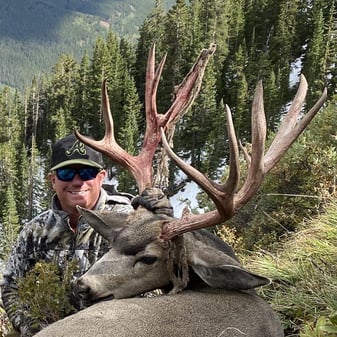
In 2025, Colorado established a new five-year big game season structure that is more in line with strategies used prior to 2020. The new structure should give bucks a break with more opportunities to elude hunters. With everyone witnessing a reduction in mature bucks across the board, public pressure became the driving force behind pushing seasons back to their original date structure. Rifle-season dates were the latest they’ll be last year and will be earlier each year going forward. The third rifle season was changed to a nine-day season, a compromise to allow for having the third rifle season earlier. The first year of this new structure proved fruitful. Many hunters in Colorado harvested some very respectable bucks. However, a warm second through fourth season left bucks more dispersed and still scattered throughout the high country. As a result, deer harvest across most of the state was down, but hunters who were able to pack in and get after it were very successful. Anticipate finding more deer on the landscape this year.
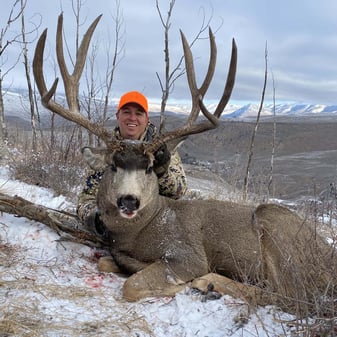
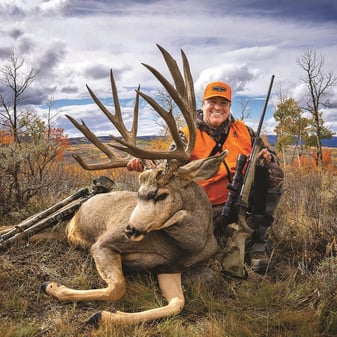
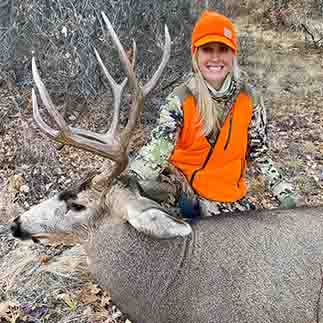
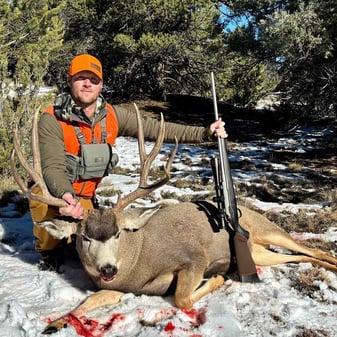
All mule deer tags are issued through the draw, and an archery, muzzleloader, and three rifle seasons are available in most units. There are a few units with rifle seasons that happen prior to the second rifle season (which is technically the first rifle season in most units for deer). These early rifle seasons often have designated areas within the unit you can hunt. Last year, due to the increase in deer population, there were also multiple units that offered a new first rifle season deer hunt. This year, they added a couple more of those hunts in different units. With the abundance of summer range in Colorado, deer will tend to be more spread out and harder to locate during the early archery and muzzleloader seasons. This also applies to units with early rifle seasons; deer will likely be spread out and harder to locate until they start to migrate to lower elevations during mid to late October or early November. Despite the added challenge, you can find them in their summer range, possibly even still holding some velvet. Once they migrate down to lower elevations, deer become more concentrated—though there are always a few difficult-to-reach stragglers that will stay as high up on the mountain as possible.
Colorado’s deer population is still one of the best in the West, but, as in most states, it is seeing a steady decline. Some areas are seeing increases in population as they start to recover from the terrible winterkill in 2022/2023. There are an estimated 384,000 mule deer in Western Colorado, a figure up 10,000 from the year prior, allowing for over 90,000 deer tags to be issued annually. This is a state that has something for everyone, regardless of physical ability, point totals, and trophy quality preferences, and should be on every mule deer hunter’s radar.
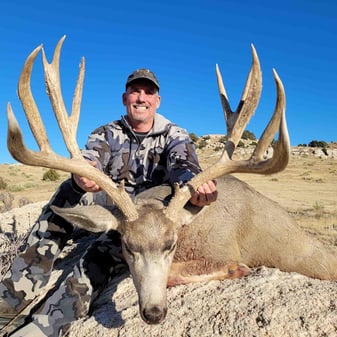
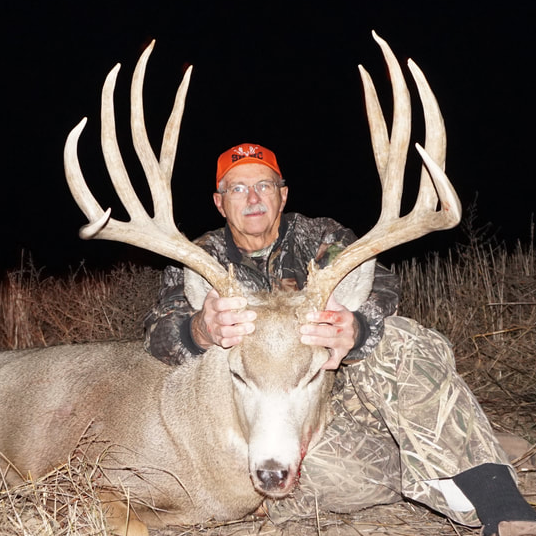
One thing that remains from the prior five-year season structure is that mature bucks are at a minimum. Depending on where you stand with your points, it might be wise to reconsider your strategy if you’re hoping for bucks over 180”. There are still a few units that remain strong contenders for mature bucks, but they are going to be difficult to find and draw. There’s really only two reasons you’ll still find mature bucks on the landscape after the bulk of rifle tags have been issued during the rut: either tags were severely restricted or a few bucks were able to find some untouched sanctuaries. If you’re in the 1-to-5-point range, holding out for the next five years likely won’t improve your chances much. Instead, it may be smarter to burn those points on the best hunt available to you now and just get out there. With season dates moving earlier, you’ll likely have the chance to hunt two to three times over the next five to seven years, and the quality of bucks should continue to improve. You will also have the opportunity to try for those top-tier bucks when they change the draw system in 2028.
The same mindset that’s always held true still holds today: there’s always potential for a trophy buck in any unit across Colorado. However, the landscape has changed. With advances in technology, in rifle hunts, and top-tier gear, it’s harder than ever to stumble upon a mature buck. Colorado is still a solid destination for regularly hunting big mulies, and that’s not likely to change due to its vast habitat and thriving alpine basins. However, mule deer hunting in Colorado is starting to resemble elk hunting more and more. There will always be plenty of opportunities to hunt, but they’ll mostly be younger bucks with an occasional mature buck that managed to slip through the cracks for four or five years.
Online applications must be submitted by 8 p.m. (MDT) on April 7, 2026.
Our magazine, which is available in print and online, has everything in one location - application info, draw details and odds, fees, hunter requirements, point structure, age restrictions, youth information, weapon restrictions, other tag opportunites, hunt planning, and much more. If you would like access to all of our research, join today!
Take the stress out of application season and hunt with confidence.
Huntin’ Fool’s Application Service handles every detail for you—building the best strategy, maximizing your draw odds, and making sure you never miss a deadline.
We apply. You hunt.
Advisor Articles from Our Magazine on Colorado Application and Hunting Strategy
It has become as difficult to find trophy class mule deer bucks in the Eastern Plains as it has on the western side. As trophy mule deer on the western side of the state became scarcer, more attention shifted to the trophy bucks coming out of the Eastern Plains. With this came increased competition for access to private ground and a sense of urgency to get more and more hunters in the field while the demand was high. High demand led to price increases as landowners found themselves faced with competing bids to hunt their land. Naturally, this led to more expensive hunts, which in turn increased the price of deer hunts again.
Combine those increasing prices with decreasing trophy quality, and the Eastern Plains of Colorado do not hold the same luster they once had. That’s not to say that all the great bucks have been killed off, making for a terrible hunt; the Plains still have good bucks and controlled hunting on private land that fits a lot of hunters’ needs. However, most hunts on the Eastern Plains with reputable outfitters will cost somewhere in the neighborhood of $15,000, have a two- to five-year waiting period to book, and offer lower trophy quality than they did ten years ago when the price was closer to $9,000.
The gem of the Eastern Plains might be the trophy whitetail bucks that have continued to thrive due to a large agricultural influence. Keep in mind that the densities are not what you are going to find in the Midwest or Eastern United States, but as far as western states go, they are holding their own. As always, whitetails are concentrated in areas with lots of agricultural fields and good river bottom habitat for escape and bedding. It is not uncommon to find solid 160” class bucks out there, and hunts in recent years have (on average) cost less and offered higher quality than mule deer hunts in the region.
The Plains still have great mule deer hunting, but do your due diligence before rushing into a hunt that will cost you a pretty penny and might not have what you are looking for.


Colorado has a reissue policy for limited licenses that are turned in after the draw. A returned license that took five or more preference points to draw will be manually reissued to the next eligible person. CPW will start by contacting the next five people from the current year’s draw order and attempt to reissue it. If none of those five accept, the license will be added to the leftover list. If a non-resident returns a license, it will be reallocated to a non-resident. Any returned license that took fewer than five preference points to draw will be placed on the leftover list. Colorado will issue any tag surrendered after the initial leftover license availability webpage. They will release a list of available permits each Tuesday and transfer them to the leftover list for purchase each Wednesday at 11 a.m. MT.
Colorado has raffle and auction Governor-type permits. For more information, go to https://cpw.state.co.us/activities/hunting/big-game/auction-and-raffle-licenses. You can also refer to the article “Governor, Commissioner, and Conservation Tags” in our January 2026 issue.
Colorado also has a landowner voucher program. Up to ten percent of private-land-only and ten percent of unit-wide permits for deer, elk, and antelope licenses for both the general and restricted quota west of I-25 may be issued as landowner vouchers. East of I-25, up to fifteen percent of elk, and antelope licenses for the general quota and up to ten percent of licenses for the land restricted quota may be issued as landowner vouchers.
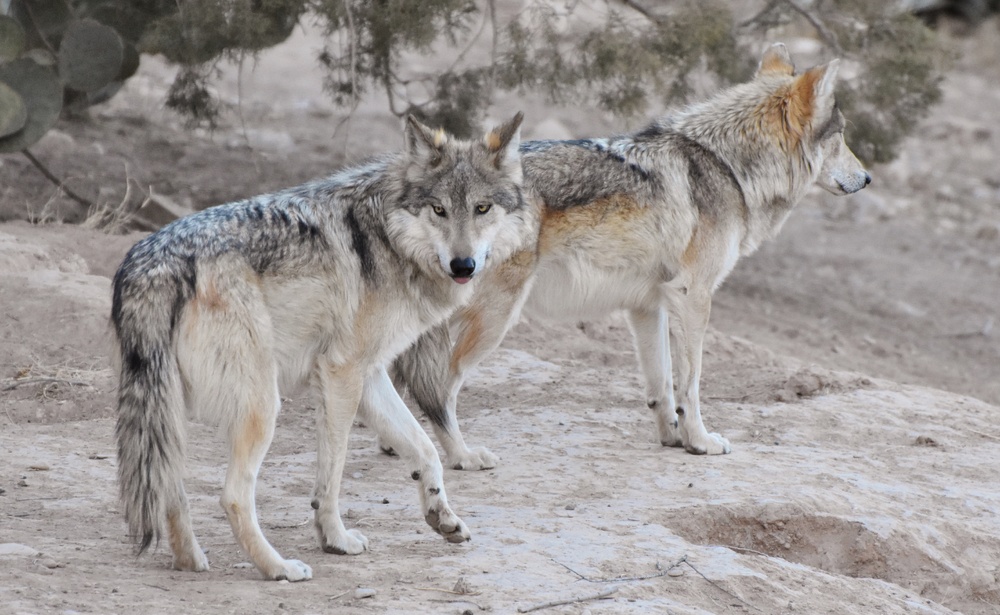
CPW has put a halt on translocating and releasing any further wolves this season. They will continue to explore options for translocations in the winter of 2026/2027. U.S. Fish and Wildlife Service requested additional information from CPW to ensure that the 10(j) rule and state management plan are being carefully considered in all wolf related management actions. The U.S. Fish and Wildlife noted that they may take further action based on future information provided to them by CPW. CPW intends to comply and provide requested data going back to December 12, 2023. Revoking the state’s authority to manage wolves and turning management over to the federal government would mean moving away from non-lethal methods of removing lethal ones. To date, of the twenty-five wolves released, eleven have died. The Colorado Cattlemen’s Association has been pushing for a pause to allow the state to create better loss control measures to deter wolves and to allow the state to catch up on loss payments to livestock producers after confirmed losses or claims for depredation have depleted funds. The state’s general fund allocated $350,000 annually to compensate ranchers. In 2025 alone, Colorado ranchers submitted claims that exceeded $1 million.
On another note, as of the time of this writing, the Pet and Livestock Protection Act has passed the house and is awaiting senate vote. This bill removes the gray wolf from the list of endangered and threatened wildlife, which could further hinder Colorado’s wolf reintroduction program. In summary, the state was not fully prepared for the outcomes and problems that the reintroduction of wolves has created.
At Huntin' Fool, we are always looking for ways to improve our service and help out members to the very best of our abilities. We believe communication is what makes our Huntin' Fool community great!