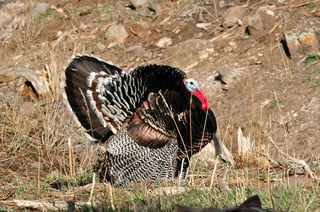
What A Couple of Turkeys
In 1980, when I used to live in Missouri, on a visit to one of my friends in St. James, Missouri two...

Black Bear: February 24, 2026
Big Game: April 23, 2026
Antlerless & Points Only: June 23, 2026
Youth & Archery General Elk Permits on Sale: July 7, 2026
Any-Bull General Elk Permits on Sale: July 9, 2026
Swan & Grouse: July 14, 2026
Spike General Elk Permits Available: July 16, 2026
Private-lands Cow Elk Permits Available: July 28, 2026
Sportsman's Resident Raffle: November 16, 2026
Spring Turkey: December 30, 2026
| UP-FRONT FEES | |
| Non-Resident Hunting License | $147.17 |
| Youth (<18) Non-Resident Hunting License | $44.97 |
| Application Fee Per Species | $21.46 |
| POST DRAW FEES (IF SUCCESSFUL)* | |
| Desert Bighorn Sheep | $4,075.74 |
| Rocky Mountain Bighorn Sheep | $4,075.74 |
| Moose | $3,564.74 |
| Rocky Mountain Goat | $3,564.74 |
| Bison | $4,946.48 |
| Limited-Entry Elk | $1,992.90 |
| Multiseason Limited-Entry Elk | $2,713.41 |
| General Bull/Spike Elk (Adult or Youth) | $867.68 |
| Multiseason General Spike Elk (Adult) | $1282.61 |
| Youth Only General Elk | $765.48 |
| Premium Limited-Entry Buck Deer | $1,428.76 |
| Multiseason Premium Limited-Entry Buck Deer | $2,381.26 |
| Limited-Entry and Limited-Entry Management Buck Deer | $1,093.54 |
| Multiseason Limited-Entry Buck Deer | $2,309.72 |
| General Deer | $612.18 |
| General Deer Dedicated Hunter Program (Adult) | $1,275.46 |
| General Deer Dedicated Hunter Program (Youth) | $935.13 |
| General Deer Dedicated Hunter Program - Per Hour | $40.88 |
| Antelope | $583.56 |
| Rocky Mountain Bighorn Sheep (Ewe) | $2,146.20 |
| Cow Moose | $2,248.40 |
| Cow Elk | $663.28 |
| Doe Deer | $241.19 |
| Doe Antelope | $241.19 |
| Black Bear | $613.20 |
| Multiseason Black Bear | $908.56 |
| Turkey | $178.85 |
| All pricing includes the 2.2% processing fee. *Current as of September 2025 |
|
| UP-FRONT FEES | |
| Hunting License | $40.88 |
| Youth Hunting License (< 18 Years Old) | $16.35 |
| Application Fee Per Species | $10.22 |
| POST DRAW FEES (IF SUCCESSFUL)* | |
| Desert Bighorn Sheep | $576.41 |
| Rocky Mountain Bighorn Sheep | $576.41 |
| Moose | $463.99 |
| Mountain Goat | $463.99 |
| Bison | $470.12 |
| Limited-Entry Elk | $320.91 |
| Multiseason Limited-Entry Elk | $574.41 |
| General Bull/Spike Elk (Adult or Youth) | $57.23 |
| Multiseason General Spike Elk (Adult) | $204.40 |
| Youth Only General Elk | $51.10 |
| Premium Limited-Entry Buck Deer | $189.07 |
| Multiseason Premium Limited-Entry Buck Deer | $343.39 |
| Limited-Entry and Limited-Entry Management Buck Deer | $96.07 |
| Multiseason Limited-Entry Buck Deer | $173.74 |
| General Deer | $47.01 |
| General Deer Dedicated Hunter Program (Adult) | $219.73 |
| General Deer Dedicated Hunter Program (Youth) | $122.64 |
| General Deer Dedicated Hunter Program - Per Hour | $40.88 |
| Antelope | $64.39 |
| Rocky Mountain Bighorn Sheep (Ewe) | $112.42 |
| Cow Moose | $254.48 |
| Cow Elk | $58.20 |
| Doe Deer | $37.20 |
| Doe Antelope | $35.77 |
| Black Bear | $95.05 |
| Multiseason Black Bear | $187.03 |
| Turkey | $40.88 |
| All pricing includes the 2.2% processing fee *Current as of September 2026 |
|
| MULE DEER (LIMITED ENTRY) | |
| Archery | Aug 15 – Sep 11, 2026 |
| Muzzleloader | Sept 23 – Oct 1, 2026 (varies by unit) |
| Muzzleloader (Late hunt on General Units) | Oct 28 - Nov 5, 2026 |
| Rifle | Oct 17 – Oct 25, 2026 (varies by unit) |
| HAMMS | Nov 7 - Nov 30, 2026 |
| MULE DEER (GENERAL) | |
| Archery | Aug 15 – Sept 11, 2026 |
| Muzzleloader | Sept 23 - Oct 1, 2026 |
| Rifle (1st season) | Oct7 - Oct 11, 2026 |
| Rifle (2nd season) | Oct 17 - Oct 25, 2026 |
| PRONGHORN | |
| Archery | Aug 15 – Sept 11, 2026 |
| Muzzleloader | Sept 23 – Oct 1, 2026 |
| Rifle | Sept 12 – Sept 20, 2026 |
| ELK (GENERAL) | |
| Archery (Spike Units) | Aug 15 – Sept 4, 2026 |
| Archery (Any Bull Units) | Aug 15 – Sept 176 2026 |
| Rifle (Spike Units) | Oct 3 – Oct 15, 2026 |
| Rifle (Any Bull Units) | Oct 3 – Oct 9, 2026 (1st season) |
| Rifle (Any Bull Units) | Oct 10 – Oct 16, 2026 (2nd season) |
| Muzzleloader (Any Bull Units) | Oct 298– Nov 5, 2026 |
| ELK (LIMITED) | |
| Archery (Early) | Aug 15 – Sept 15, 2026 |
| Archery (Late) | Nov 28 – Dec 13, 2026 |
| Muzzleloader | Sept 21 – Oct 2, 2026 |
| Elk Rifle (Early) | Sept 16 – Sep 210 2026 |
| Rifle (Mid) | Oct 3 – Oct 15, 2026 |
| Rifle (Late) | Nov 7 – Nov 15, 2026 |
| BISON | |
| Any Legal Weapon | Aug 2026 – Jan 2027 (varies by unit) |
| DESERT BIGHORN SHEEP | |
| Any Legal Weapon | Sept - Nov 2026 (varies by hunt/ unit) |
| ROCKY MOUNTAIN BIGHORN SHEEP | |
| Any Legal Weapon | Sept - Nov 2026 (varies by hunt/ unit) |
| MOUNTAIN GOAT | |
| Any Legal Weapon | Sept - Nov 2026 (varies by hunt/ unit) |
| SHIRAS MOOSE | |
| Any Legal Weapon | Sept 12– Oct 31, 2026 (varies by hunt/ unit) |
| YEAR | ELK, DEER, ANTELOPE & ONCE-IN-A-LIFETIMES | BLACK BEAR | ANTLERLESS |
|---|---|---|---|
| 2026 | May 13 | March 3 | July 7 |
| 2025 | May 13 (emails & online) | February 27 | July 2 |
| 2024 | May 14 (emails & online) | February 28 | July 5 |
| 2023 | May 25 (emails) | February 28 | July 6 |
| 2022 | May 13 (emails) | March 2 | June 28 |
| 2021 | May 11 (emails) | March 2 | June 29 |
| 2020 | May 15 (emails) | June 30 | |
| 2019 | May 13 (emails) | ||
| 2018 | May 11 |
Utah is primarily an over-the-counter spring turkey state, but the limited-entry draw gives hunters a 19 day head start before the statewide general season. The draw is worthwhile for hunters who value lower pressure, earlier start date, and first crack at fired up birds. Utah issues fifty percent of limited-entry and once-in-a-lifetime permits to applicants with the most bonus points. The other fifty percent are awarded randomly to applicants who did not receive one of these “bonus” permits. Applicants in the random draw will have an extra chance in the draw for each bonus point they’ve accumulated over the years. If there is an odd number of permits available in the draw, the majority of permits will be awarded in the bonus draw to the maximum point holders. For example, if five permits are available, three of those permits will be issued in the bonus draw to the applicants with the most points, and the remaining two permits will be issued in the random draw. Utah issues ten percent of their draw permits to nonresidents. A nonresident who skips the draw can buy the statewide general-season permit beginning March 11, 2027 and hunt May 3-31.
Utah supports Rio Grande and Merriam's turkeys across river bottoms, pinyon-juniper and oak country, and higher ponderosa forests. The DWR estimated 33,000-38,000 wild turkeys in spring 2026. Two mild winters improved numbers in much of the state, while dry conditions continued to pressure southwestern populations.
Take the stress out of application season and hunt with confidence.
Huntin’ Fool’s Application Service handles every detail for you—building the best strategy, maximizing your draw odds, and making sure you never miss a deadline.
We apply. You hunt.
Residents and nonresidents may apply for the spring limited-entry regional hunts, Pahvant Ensign CWMU, East Zion CWMU, or a turkey bonus point. Applicants may list up to five choices and may apply in groups of up to four. Group applicants will have their points totaled, averaged, and rounded down to the whole number. A group application will be evaluated as a single application in the drawing. It is imperative that you take notice of the number of tags available for a hunt and/or the bonus point minimums (the draw odds) before applying. If the draw has only one or two tags available, do not apply with three or four individuals, as you will have no chance of drawing. A valid Utah hunting or combination license is required at application and while hunting. The application fee is nonrefundable; the $175 permit fee is charged only if successful.
Utah uses bonus points, not a preference-point guarantee. Fifty percent of each hunt's permits go to applicants with the most points. The remainder are random, and every applicant receives one random number plus another for each point. There is no waiting period after drawing a limited-entry turkey permit. Drawing or buying a remaining limited-entry or CWMU permit resets turkey bonus points; buying a general-season permit does not.
| 2026-27 Timeline | Date / time | Nonresident action |
|---|---|---|
| Fall management permits on sale | Sept. 10, 2026 | Secure private access before buying |
| Limited-entry application opens | Dec. 15, 2026 | Apply at UtahDraws.com |
| Limited-entry deadline | Dec. 29, 2026, 11 p.m. MT | Submit/edit/withdraw by deadline |
| Drawing results | Jan. 7, 2027 | Keep payment card valid through February |
| Remaining LE permits | March 11, 2027 | First-come; points reset if purchased |
| General-season permits | March 11, 2027, 8 a.m. | Unlimited statewide spring option |
Spring general-season permits are unlimited and valid statewide outside closed areas, Native American trust lands, and CWMUs. Youth age 17 or younger may hunt during the three day youth season and continue into the general season if unsuccessful. A hunter who draws a limited-entry permit cannot also buy a spring general-season permit, although an unsuccessful youth limited-entry hunter may continue into the youth and general seasons with the same permit.
Fall management permits are limited but sold first-come rather than drawn. Four region permits cover selected areas in the Northern, Central, Southeastern, and Southern regions. The mapped hunt areas are all or mostly private land, and the DWR strongly recommends documented permission before purchase. Fifteen percent are reserved for youth. Conservation permits and landowner sold CWMU permits may also be obtained in addition to ordinary draw pathways, subject to their specific rules.
Advisor Articles from Our Magazine on Application and Hunting Strategy
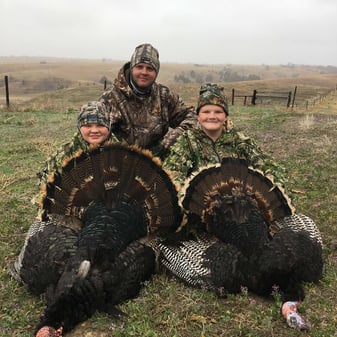
The five regional hunts are Central (TK1003), Northeastern (TK1004), Northern (TK1005), Southeastern (TK1006), and Southern (TK1007). Fifteen percent of approved limited-entry quotas are reserved for youth. Utah does not publish a simple guaranteed nonresident percentage in the turkey guidebook. Residency, youth status, bonus and random rounds, group size, and hunt choices all affect issuance. The table below uses the latest report, the 2025 draw, as the baseline for the upcoming 2027 application. Random odds do not take into account extra bonus points. It is reported to simply give an estimate by how many tags and applicants are available after bonus recipients drew out.
| Hunt | 2025 NR adult applicants | NR permits | NR Bonus odds / Point Level | NR Random Odds |
|---|---|---|---|---|
| Central TK1003 | 27 | 6 | 100% @ 6 pts | 16% |
| Northeastern TK1004 | 33 | 8 | 75% @ 3 pts | 14% |
| Northern TK1005 | 15 | 4 | 50% @ 3 pts | 21% |
| Southeastern TK1006 | 53 | 11 | 100% @ 4 pts | 14% |
| Southern TK1007 | 213 | 37 | 84% @ 4 pts | 9% |
To draw with points as a nonresident, the Northeastern area offered the best odds being 75% with 3 points. The Central region is the toughest to draw with points as you needed 6 points to pull it. The Southern region gives out the most tags, but has the most applicants as well.
Youth receive a separate 15% set-aside. In 2025, 23 nonresident youth applied and six drew, for an overall odds of 26%. All six were issued in the random portion, so no youth obtained a tag on points. Youth should apply alone or in a youth-only group; adding an adult removes the application from the youth pool.
| 2025 Hunt | Total Permits Issued | Harvest | Success |
|---|---|---|---|
| Central TK1003 | 496 | 228 | 52.0% |
| Northeastern TK1004 | 247 | 95 | 48.1% |
| Northern TK1005 | 547 | 252 | 55.6% |
| Southeastern TK1006 | 199 | 98 | 57.7% |
| Southern TK1007 | 615 | 283 | 52.9% |
Fall management hunting is not a draw. Permits are sold first-come beginning September 10 and are designed to reduce nuisance and depredating flocks. The DWR sets quotas around conflict management needs, not recreational demand, and the published guidebook directs hunters to the Hunt Planner for final boundaries and sale details.
In fall 2024, Utah sold 2,808 permits across the Northern, Central, and Southeastern regions. Estimated harvest was 1,121 turkeys: 794 Northern, 314 Central, and 13 Southeastern. Survey success was 66.6%, 84.4%, and 50.0%, respectively. These high percentages are inseparable from private-land access; a permit without documented permission may have little practical value.
Northern and Northeastern drew out on points at the 3 point level. Apply there if you have 3 points for a chance or if you have 4 points and want to ensure a tag.
If you don’t have the points and want to try for a random tag, apply in regions like Northern and Central where demand and tag quota are closer together.
The best guaranteed hunting opportunity is skipping the draw and buying the unlimited statewide general-season permit. The tradeoff is later dates and more pressure.
Spring statewide general-season permit: unlimited, one bearded turkey, May 3-31, 2027; available March 11.
Spring youth general-season hunt: April 30-May 2, 2027, followed by the regular season if unsuccessful.
Remaining limited-entry permits: available March 11, 2027 if any survive the draw; purchasing one resets bonus points.
Fall management permits: limited first-come permits for four regions, available September 10, 2026; up to three permits per hunter.
Conservation permits: sold through participating conservation organizations, typically through fundraising events.
CWMU landowner permits: available directly from participating operators; public CWMU permits are offered through the draw.

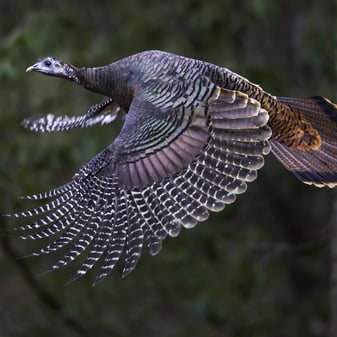
Utah has Rio Grande and Merriam's turkeys, with extensive mixing where habitat zones overlap. Rio Grande birds are most associated with lower-elevation cottonwood river bottoms, agricultural edges, oak, and pinyon-juniper habitats. Merriam's are most dependable in higher ponderosa pine, mountain meadows, and forested drainages. Some Utah Rio Grande populations move into elevations and habitat more typical of Merriam's, so subspecies should be treated as a regional tendency rather than a hard unit boundary.
The 2026 statewide population estimate was 33,000-38,000. DWR reported increases in most regions after two mild winters, with a localized decline in southwestern Utah tied to dry conditions. That regional divergence is a reason to compare current Hunt Planner notes before choosing Southern solely for its historically larger allocation.
Utah's general-season spring harvest has rebounded sharply. Total harvest increased from 1,881 in 2023 to 2,632 in 2024 and 3,296 in 2025. The 2025 figure was 25% above 2024 and 78% above the 1991-2024 average. Success improved to 30.9%, the highest rate in the displayed 2010-2025 series.
| Season | Hunters | Harvest | Success |
|---|---|---|---|
| Spring general 2021 | 9,539 hunters | 2,035 | 21.3% |
| Spring general 2022 | 8,493 hunters | 1,923 | 22.6% |
| Spring general 2023 | 8,249 hunters | 1,881 | 22.8% |
| Spring general 2024 | 9,321 hunters | 2,632 | 28.2% |
| Spring general 2025 | 10,678 hunters | 3,296 | 30.9% |
| 2025 regular-season portion | 9,428 hunters | 2,920 | 31.0% |
| 2025 three-day youth portion | 1,250 hunters | 376 | 30.1% |
| 2025 limited-entry/CWMU | 2,122 hunters | 966 | 45.5% |
A hunter may obtain only one spring permit and take one bearded turkey. The spring permit may be limited-entry, general-season, conservation, or CWMU. Qualifying youth who fail to harvest on a limited-entry permit may continue through the youth and general seasons with that same permit.
A hunter may obtain up to three fall management permits: no more than two beardless permits and one either-sex permit. Each permit authorizes one turkey of the sex class printed on it.
You need both a valid Utah hunting or combination license and a turkey permit. The license must remain valid through the hunt; if it will expire after the application but before the season, buy a new license before hunting. The three-day nonresident small-game license cannot be used to apply for or obtain a turkey permit.
| Item | Fee | Notes |
|---|---|---|
| 365-day hunting license, adult | $144 | Required to apply, obtain permit, and hunt |
| 365-day hunting license, youth 17 and under | $44 | Same turkey permit price as adult NR |
| 365-day combination license, adult | $190 | Includes fishing |
| 365-day combination license, youth | $58 | Includes fishing |
| Limited-entry/general/CWMU turkey permit | $175 | One spring turkey permit total |
| Drawing application / point fee | $21 | Nonrefundable; permit charged only if drawn |
| Electronic transaction fee | 2.2% | Applies to card transactions and permit fee |
| Late turkey harvest-report fee | $25 | Required with late report to restore eligibility |
Hunter education: anyone born after December 31, 1965 must provide proof of a DWR-approved course before applying for or obtaining a license or permit.
Age: there is no minimum age for turkey if hunter education and licensing requirements are met. Hunters under 16 must be accompanied by a responsible adult in the field.
Trial Hunting Program: eligible first time hunters may use a trial authorization under direct supervision and may obtain turkey permits allowed by that program.
Tagging: tag the carcass immediately upon taking possession. Utah also offers optional e-tagging through its mobile app.
Mandatory reporting: beginning with fall 2026, every turkey permit holder must report within 30 days of the hunt ending, even if they did not hunt or harvest.
| Season | Season Dates | Area / restriction |
|---|---|---|
| Fall management harvest | Oct. 1, 2026-Feb. 28, 2027 | Selected areas in four regions; mostly private |
| Spring limited-entry | April 10-29, 2027 | Five regional units; one bearded turkey |
| Spring youth general season | April 30-May 2, 2027 | Statewide; age 17 or younger |
| Spring general season | May 3-31, 2027 | Statewide; OTC permit |
| Spring CWMU | April 10-May 31, 2027 | Operator provides at least five hunt days |
Turkey shooting hours are 30 minutes before official sunrise to 30 minutes after official sunset. Legal methods include broadhead archery equipment, crossbows with broadhead bolts, and shotguns firing BB or smaller shot. Rimfire firearms are legal only during the fall turkey season. Turkeys sitting or roosting in a tree or structure may not be taken, and baiting is prohibited.
Northern Utah: Cache, Morgan, Summit, Weber, and Box Elder hold a mix of public and private birds. Public starting points include the Uinta, Wasatch, Cache National Forest, Blacksmith Fork Canyon, the Wellsville Range, Richmond WMA, and Walk-in Access parcels around Clarkston. In 2025 the Northern region produced 550 general season birds and 55.6% limited-entry success, but private property concentrations can make scouting deceptive.
Central Utah: Utah, Sanpete, Tooele, Juab, and Wasatch counties produced the largest 2025 general-season regional harvest at 873. The Manti-La Sal, Fishlake, and Uinta,Wasatch,Cache national forests, DWR lands, and Walk-in Access parcels create public options, but many low elevation flocks transition through agricultural private land. Sanpete and Utah counties led the region's harvest.
Northeastern and Southeastern Utah: Duchesne and Uintah counties produced 389 general-season birds at 35.4% success, while the Southeastern region produced 293 at 36.4%. Ashley National Forest, Uinta Basin river corridors, Manti-La Sal National Forest, and San Juan/Emery canyon systems offer a useful mix of Rio type lowland and Merriam's type mountain habitat. Southeastern also posted the highest 2025 regional limited-entry success at 57.7%.
Southern Utah: Dixie and Fishlake national forests, ponderosa benches, pinyon-juniper, and canyon water sources provide broad public acreage. However, DWR reported lower southwestern populations after dry conditions. Focus on current green up, perennial water, and elevations turkeys can reach after winter. Southern remains popular because of geography and tag volume, not because it is easy to draw.
Use the Utah Hunt Planner to layer hunt boundaries, public ownership, WMAs, and Walk-in Access properties. A map layer is not legal access by itself: obtain documented permission on private land and verify restrictions on CWMUs, tribal trust lands, national parks, refuges, state parks, and municipalities. Adults 18 and older also need a hunting, fishing, or combination license to enter designated WMAs in Davis, Salt Lake, Utah, and Weber counties.
Apply for limited-entry only if the earlier window matters. The unlimited statewide general season guarantees a spring opportunity without risking $21 on the draw.
Do not confuse Southern's tag count with good odds. It had the most nonresident permits in 2025 and still the worst random odds because demand was overwhelming.
High point applicants should compare the bonus cutoff, not only overall odds. Central required six points in 2025; Southern and Southeastern drew at four.
Youth should apply solo or in a youth-only group. An adult in the group removes access to the 15% youth set aside.
Do not buy a fall permit until permission is documented. The fall boundaries are intentionally built around private land depredation areas.
Keep the Utah hunting license valid through the season, not merely through application day, and keep the payment card valid through the January draw.
Complete the new mandatory harvest report within 30 days, even if you never hunted. Missing it blocks the next limited-entry application until the report and $25 late fee are completed.
Scout elevation, green up, and water rather than relying on county harvest alone. Utah flocks often shift rapidly between private wintering areas and public spring habitat.
At Huntin' Fool, we are always looking for ways to improve our service and help out members to the very best of our abilities. We believe communication is what makes our Huntin' Fool community great!