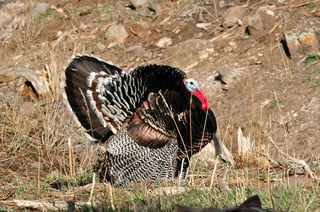
What A Couple of Turkeys
In 1980, when I used to live in Missouri, on a visit to one of my friends in St. James, Missouri two...

| UP-FRONT FEES | |
| Annual Hunting License and Access Fee (Adult) + Processing Fee | $195.00 |
| Annual Hunting License and Access Fee (Youth) | $95.75 |
| Trophy Species Application Fee (Adult or Youth) | $45.75 |
| Bighorn Sheep, Moose, or Mtn Goat Tag (Adult or Youth) | $2,626.75 |
| Online & Phone Application Processing Fee (Adult) | $90.03 |
| Online & Phone Application Processing Fee (Youth) | $87.05 |
| Elk, Deer, Antelope Application Fee (Adult or Youth) + Processing Fee | $22.15 |
| POST DRAW FEES (IF SUCCESSFUL) | |
| Elk Tag | $651.75 |
| Deer Tag | $351.75 |
| Antelope Tag | $342.75 |
| Black Bear Tag | $231.75 |
| Wolf Tag | $31.75 |
| Junior Mentored Elk (10-17 years old) | $299.75 |
| Junior Mentored Deer (10-17 years old) | $176.75 |
| Junior Mentored Black Bear (10-17 years old) | $116.75 |
| Archery Permit | $81.75 |
| Muzzleloader Permit | $81.75 |
| All transactions that take place on the phone or online are subject to a processing fee. The only way to avoid processing fees is to apply at a regional F&G office with a debit card, personal check, or with cash. Credit cards used at regional offices incur a 3% processing fee. *Tag fees listed do not include online/phone application processing fees. |
|
| UP-FRONT FEES | |
|---|---|
| Annual Hunting License and Access Fee (Adult) | $15.75 |
| Annual Hunting License and Access Fee (Youth) | $8.25 |
| Trophy Species Application Fee (Adult or Youth) | $16.75 |
| Bighorn Sheep, Moose, or Mtn Goat Tag (Adult or Youth) | $199.75 |
| Elk, Deer, Antelope Application Fee (Adult or Youth) | $6.25 |
| POST DRAW FEES (IF SUCCESSFUL) | |
| Elk Tag | $36.75 |
| Deer Tag | $24.75 |
| Antelope Tag | $36.50 |
| Black Bear Tag | $13.75 |
| Wolf Tag | $13.75 |
| Junior Mentored Elk (10-17 years old) | $18.75 |
| Junior Mentored Deer (10-17 years old) | $12.50 |
| Junior Mentored Black Bear (10-17 years old) | $7.75 |
| All transactions that take place on the phone or online are subject to a processing fee. The only way to avoid processing fees is to apply at a regional F&G office with a debit card, personal check, or with cash. Credit cards used at regional offices incur a 3% processing fee. *Tag fees listed do not include online/phone application processing fees. |
|
| IDAHO ELK SEASON DATES | |
| Archery (General / Controlled) | Late Aug – late Sep 2026 (permit- and unit-specific) |
| Rifle (General / Controlled) | Oct – Nov 2026 (permit- and unit-specific) |
| Muzzleloader (General / Controlled) | Oct – Dec 2026 (permit- and unit-specific) |
| IDAHO DEER SEASON DATES | |
| Archery (General / Controlled) | Late Aug – Sep 2026 (permit- and unit-specific) |
| Rifle (General / Controlled) (Mule & Whitetail) | Oct – Nov 2026 (permit- and unit-specific) |
| Muzzleloader (General / Controlled) | Nov – Dec 2026 (permit- and unit-specific) |
| IDAHO ANTELOPE (PRONGHORN) SEASON DATES | |
| Archery (Controlled Hunts) | Mid-Aug – mid-Sep 2026 (permit- and unit-specific) |
| Rifle (Controlled Hunts) | Sep 25 – Oct 24, 2026 (permit- and unit-specific) |
| IDAHO BLACK BEAR SEASON DATES | |
| Spring (Most Units) | Apr – Jun 2026 (bait/hound rules vary by unit) |
| Fall (Most Units) | Aug – Nov/Dec 2026 (unit-specific) |
| IDAHO MOUNTAIN GOAT SEASON DATES | |
| Any Legal Weapon | Aug 30 – Nov 12, 2026 |
| IDAHO MOOSE SEASON DATES | |
| Any Legal Weapon | Sep – Nov 2026 (unit- & weapon-specific) |
| IDAHO BIGHORN SHEEP SEASON DATES | |
| Rocky Mountain Bighorn Any Legal Weapon | Sep – Oct 2026 (permit- and unit-specific) |
| California Bighorn Any Legal Weapon | Sep – Oct 2026 (permit- and unit-specific) |
Disclaimer: Idaho seasons vary by unit/zone, weapon, and tag type; some hunts are controlled with limited windows, quotas, or harvest closures. Always verify exact dates and regulations with Idaho Fish & Game before planning a hunt: https://idfg.idaho.gov/hunt/seasons
| YEAR | MOOSE, SHEEP & GOAT | DEER, ELK & ANTELOPE | SPRING BEAR | SECONDARY DRAW |
|---|---|---|---|---|
| 2026 | May 11, 11:44 a.m. (MDT) | June 17, 9:05 a.m. (MDT) | TBD | TBD |
| 2025 | May 6, 11:54 a.m. (MDT) | June 12, 12:00 p.m. (MDT) | Feb 27 | Aug 21 |
| 2024 | May 8, 1:35 p.m. (MDT) | June 25, 10:27 a.m. (MDT) | Feb 28 | Aug 22 |
| 2023 | May 19, 1:45 p.m. (MDT) | June 29, 2:00 p.m. (MDT) | March 3 | Aug 23 |
| 2022 | May 19, 11:40 a.m. (MDT) | June 28, 8:40 p.m. (MDT) | March 4 | |
| 2021 | May 13, 10:50 a.m. (MDT) | July 1, 10:00 a.m. (MDT) | Feb 19 | |
| 2020 | May 15, 11:10 a.m. (MDT) | June 19, 2:30 p.m. (MDT) | Feb 21 | |
| 2019 | May 17 | June 25 | ||
| 2018 | June 8 | July 8 |
Idaho is one of the strongest nonresident turkey states in the West because hunters can buy general turkey tags over the counter and hunt broad spring and fall seasons without needing to enter a lottery. Idaho Fish and Game estimates about 50,000 wild turkeys in the state, with the highest densities in the Panhandle and Clearwater regions. Merriam's birds dominate the harvest, but Rio Grande and Eastern genetics occur in limited pockets, and hybrid birds are common where introductions have mixed. The controlled-hunt system is still worth watching, especially for hunters who want less pressure or special timing in southern Idaho. For 2026 and 2027, Idaho lists 820 spring controlled tags, including 125 youth-only tags, and 260 fall controlled tags, including 45 youth-only tags. Nonresidents can draw no more than 10% of controlled tags before leftovers, but that cap does not apply once leftover tags go on sale.
Take the stress out of application season and hunt with confidence.
Huntin’ Fool’s Application Service handles every detail for you—building the best strategy, maximizing your draw odds, and making sure you never miss a deadline.
We apply. You hunt.
Idaho turkey controlled hunts are random. There is no preference point or bonus point system, so every applicant is equal. Applicants must first buy a valid Idaho hunting license. The spring controlled-hunt application period was February 1-March 1, with results posted March 20 and leftovers were available starting March 25 at 10:00 a.m. MDT. The fall controlled-hunt application period was May 1-June 5, with results posted July 10 and leftovers were available starting July 15 at 10:00 a.m. MDT. A controlled hunt tag is valid for the controlled hunt drawn or for any open general hunt in that calendar year. Hunters may only harvest one bird per controlled hunt tag. Youth-only controlled hunt applicants must be 9-17 when applying, but must be 10-17 during the hunt.
The general OTC turkey tag is Idaho's best nonresident option. A nonresident can buy a hunting license and turkey tag, then hunt open general spring seasons for male or bearded birds and open fall seasons for either-sex birds. Special unit turkey tags are also available for $5 and are valid in fall general seasons in Units 1, 2, 3, 4, 4A, 5, 6, 7, and 9. An unused spring general tag may be used in a fall season, but hunters need to track calendar year tag limits carefully.
Advisor Articles from Our Magazine on Idaho Application and Hunting Strategy
Idaho's 2026 and 2027 spring controlled turkey quota is 820 tags: 695 adult controlled tags and 125 youth-only tags. With the 10% nonresident cap, the theoretical nonresident pool is roughly 82 tags statewide before leftovers, but the cap is applied by controlled-hunt allocation rather than as a statewide guaranteed pool. The largest adult spring quotas are 50-2 with 200 tags, 38-1 split into two 100-tag periods, and 60-1 with 100 tags. Those higher quota hunts are the best places to start for draw strategy, while 54-1 has only 25 adult tags and should be treated as a low-odds application choice.
| Hunt | Area | Season Dates | Quota |
|---|---|---|---|
| 9001 | 50-1 youth | Apr. 8-May 25 | 100 |
| 9002 | 54-1 youth | Apr. 8-May 25 | 25 |
| 9003 | 21-1 | Apr. 15-May 25 | 70 |
| 9004 | 38-1 | Apr. 15-Apr. 30 | 100 |
| 9005 | 38-1 | May 1-May 25 | 100 |
| 9006 | 50-2 | Apr. 15-May 25 | 200 |
| 9007 | 54-1 | Apr. 15-May 25 | 25 |
| 9008 | 60-1 | Apr. 15-May 25 | 100 |
| 9009 | 63A | Apr. 15-Apr. 30 | 50 |
| 9010 | 63A | May 1-May 25 | 50 |
The 2026 and 2027 fall controlled turkey quota is 260 tags: 215 adult tags and 45 youth-only tags. Fall controlled hunts are either-sex hunts and are mostly southern or central Idaho opportunities. For nonresidents, fall is useful as a secondary application because pressure is lower and leftover tags can matter, but the best turkey hunting value is still the general OTC fall framework in northern Idaho.
| Hunt | Area | Season Dates | Quota |
|---|---|---|---|
| 9011 | 22-1 youth | Aug. 30-Oct. 9 | 20 |
| 9012 | 50-1 youth | Sept. 15-Dec. 31 | 25 |
| 9013 | 22-2 | Oct. 10-Dec. 31 | 75 |
| 9014 | 36B-1 | Aug. 30-Dec. 31 | 30 |
| 9015 | 38-1 | Sept. 15-Oct. 9 | 60 |
| 9016 | 54-2 | Oct. 10-Dec. 31 | 50 |
The best controlled-hunt odds are the larger quota hunts: spring 50-2, 38-1, and 60-1, and fall 22-2 and 38-1. These hunts give nonresidents the largest theoretical allocation and the best chance of leftover tags if resident demand is low. Access limited hunts can be productive but should not be applied for casually; a tag is only valuable if the hunter already has public land access mapped or private access arranged.
| OTC | Area | Season Dates | Legal Wildlife |
|---|---|---|---|
| Youth spring general | Most North and Southeast units | Apr. 8-May 25 | Male or bearded turkey |
| Spring general | Most North and Southeast units | Apr. 15-May 25 | Male or bearded turkey |
| Farragut spring archery | Unit 2, Farragut State Park/WMA only | Apr. 15-Apr. 30 | Male or bearded turkey. Archery permit required |
| Fall general | Units 1, 2 except Farragut, 3, 4, 4A, 5, 6, 7, 9 | Aug. 30-Jan. 31 | Either sex |
| Fall general | Units 8, 8A, 10A, 11, 11A, 13, 14, 15, 16, 18, 21, 21A, part 28, 29, 30, 68A, 70-78 | Aug. 30-Dec. 31 | Either sex |
| Fall general | Units 10, 12, 16A, 17, 19, 20 | Aug. 30-Oct. 9 | Either sex |
| Fall general | Outside NFS boundary in Units 22, 31, 32, 32A, 33, 39 | Aug. 30-Oct. 9 | Either sex |
| Farragut fall archery | Unit 2, Farragut State Park/WMA only | Nov. 1-Dec. 1 | Either sex. Archery permit required |

Idaho has Merriam's, Rio Grande, and Eastern wild turkeys, plus hybrids where releases and translocations have mixed. Merriam's turkeys make up the bulk of Idaho opportunity and are most common in mountain and timbered habitats in the Panhandle, Clearwater, and Southwest regions. Rio Grande birds were introduced along the Boise, Payette, Snake, and Weiser river corridors. Eastern birds were introduced near Dworshak Reservoir.
The most recent general season report available is 2024. It shows 6,798 spring general turkeys harvested by 18,313 hunters, a rough harvest-per-hunter rate of 37%. The leading 2024 general hunt units were 10A with 908 birds, 8A with 576, 39 with 560, and 2 with 454. The latest controlled turkey harvest table available on Idaho's site is 2021, with 205 spring-controlled birds harvested.
| Year | Season | Harvest | Notes |
|---|---|---|---|
| 2024 | Spring general | 6,798 | 18,313 hunters; about 37% harvest per hunter |
| 2024 | Top general unit | Unit 10A: 908 | Best statewide unit harvest |
| 2024 | Other top units | 8A: 576; 39: 560; 2: 454 | Consistent high public land units |
| 2021 | Spring controlled | 205 | Latest controlled turkey harvest table available |
During spring seasons, the daily bag limit is two male turkeys. A legal spring turkey is a male turkey or a turkey with a visible beard, and only two male turkeys may be taken in spring using general or controlled tags. During fall seasons, the daily bag limit is equal to the number of valid tags possessed, and either-sex turkeys may be taken. Fall season limit is the number of legal tags the hunter holds in that calendar year. Any turkey harvested during the January 1-31 portion of an overlapping season counts against that calendar year's available tags.
A nonresident needs a valid Idaho hunting license and a turkey tag. Controlled-hunt applicants must hold a valid license before applying and pay the nonrefundable controlled-hunt application fee. A small-game license or three-day small-game license can be used for general turkey hunting, but holders of a three-day nonresident small-game license, nonresident nongame license, or Hunting Passport may not apply for controlled hunts.
| Item | Fee | Notes |
|---|---|---|
| Hunting license | $185 | Includes three-day fishing |
| Combination hunting/fishing | $264 | Annual license |
| Small-game hunting license | $141.75 | Valid for turkey general hunting |
| Three-day small-game license | $71.75 | Not valid to apply for controlled hunts |
| Access/Depredation fee | $10 adult; $4 youth/DAV | Required with first annual license |
| Turkey tag | $88 | General or extra turkey tag |
| Special unit turkey tag | $5 | Fall general Units 1, 2, 3, 4, 4A, 5, 6, 7, 9 |
| Junior mentored turkey tag | $44.75 | Youth/DAV rules apply |
| Controlled-hunt application | $18 | Nonrefundable |
| Archery permit | $81.75 | Required for archery-only hunts |
Nonresidents should start with Units 10A, 8A, 39, and 2 because they led Idaho's general spring harvest. Units 10A and 8A sit in the Clearwater/Panhandle influence zone where timber, agricultural edges, creek bottoms, and lower-elevation winter range create reliable bird numbers and public-land access. Unit 39 near Boise produces strong harvest numbers but has heavier local pressure and more public access complexity. In southern Idaho, controlled hunts in 50, 54, 60, and 63A can be useful for hunters already familiar with and have private land permission, BLM access, and know agricultural roost patterns.
In spring, hunt lower elevations and south facing openings early, then follow birds toward higher benches and timber edges as snow leaves. In the Panhandle and Clearwater, logging roads, gated roads, state endowment lands, national forest edges, and “Access Yes!” properties are all worth mapping before the season.
In fall, concentrate on family groups around food, water, and agricultural edges; special unit tags in northern Idaho are a cheap way to extend opportunity.
Buy the OTC tag first unless you have a specific controlled hunt plan. Idaho's general turkey opportunity is strong enough that a draw is not necessary for nonresidents. If wanting to apply for a controlled tag, apply for higher quota spring hunts such as 50-2, 38-1, or 60-1. Avoid low quota hunts unless you have a reason to be there. Confirm roads, land status, and private permission before applying. Watch March 25 and July 15 leftover sales. The 10% nonresident cap does not apply to leftover controlled turkey tags. Do not overlook the $5 special unit turkey tag for fall in northern Idaho units. It is one of the cheapest ways to add opportunity. Use 2024 harvest data to prioritize general units: 10A, 8A, 39, and 2 were the top producers. Remember that spring controlled and fall controlled hunts are separate application periods. Missing March 1 does not eliminate the fall draw.
At Huntin' Fool, we are always looking for ways to improve our service and help out members to the very best of our abilities. We believe communication is what makes our Huntin' Fool community great!